

Selling a template, an ebook or a course link looks simple until the practical details show up. Buyers still expect a smooth checkout, clear access, and a sensible answer to VAT or tax, especially in a market as active as the UK, where online buying is already fully embedded in retail behaviour as outlined by the U.S. Department of Commerce. The best platform to sell digital products is usually the one that fits the way the seller handles compliance, fulfilment and support, not the one with the longest feature list.
That's why this comparison is organised around the split that matters, whether a platform acts like a merchant-of-record or leaves the seller to handle tax and filing. It also keeps an eye on what a creator, coach, freelancer or small business needs, whether that's a one-page OfferLink, a branded storefront, a course platform or a full ecommerce stack. For a practical benchmark on creator monetisation setups, see these creator monetization platform test results.
Table of Contents
- 1. Ko-fi Shop
- 2. Gumroad
- 3. Payhip
- 4. Podia
- 5. SendOwl
- 6. Sellfy
- 7. Lemon Squeezy
- 8. Shopify + Digital Products app
- 9. WooCommerce with EU VAT tools
- 10. AmaJova
- Top 10 Digital Product Platforms
- Choosing a Platform You Can Keep Running
1. Ko-fi Shop
Ko-fi is built for creators who want speed, not a project. The shop sits beside tips, memberships and commissions, so it suits people who already have an audience and need a simple place to sell files or a few physical items without turning the whole thing into a complex store. Its biggest strength is friction reduction, which matters when buyers arrive from a bio link, a social post or a newsletter.
Where Ko-fi works well
Ko-fi makes sense for low-stakes offers, lead magnets, simple downloads and testing whether an audience will pay. The platform's pay-what-you-want and limited-quantity options can help creators validate an idea before moving to something heavier. It also fits sellers who want tips and shop sales in one place rather than splitting revenue across multiple tools.
Where it falls short
Ko-fi is not a Merchant-of-Record, so the seller remains responsible for VAT or sales tax where that applies. That matters in the UK because buyers expect a clear price and order record, and sellers need to know who is handling the tax side before the sale goes live. Ko-fi's shop fee is 5% plus payment processor fees, so it's rarely the cheapest route once sales volume rises.
Practical rule: Ko-fi is best when the priority is launching quickly and keeping the offer page simple. It is less useful when the seller needs built-in compliance handling or a deeper post-purchase workflow.
2. Gumroad
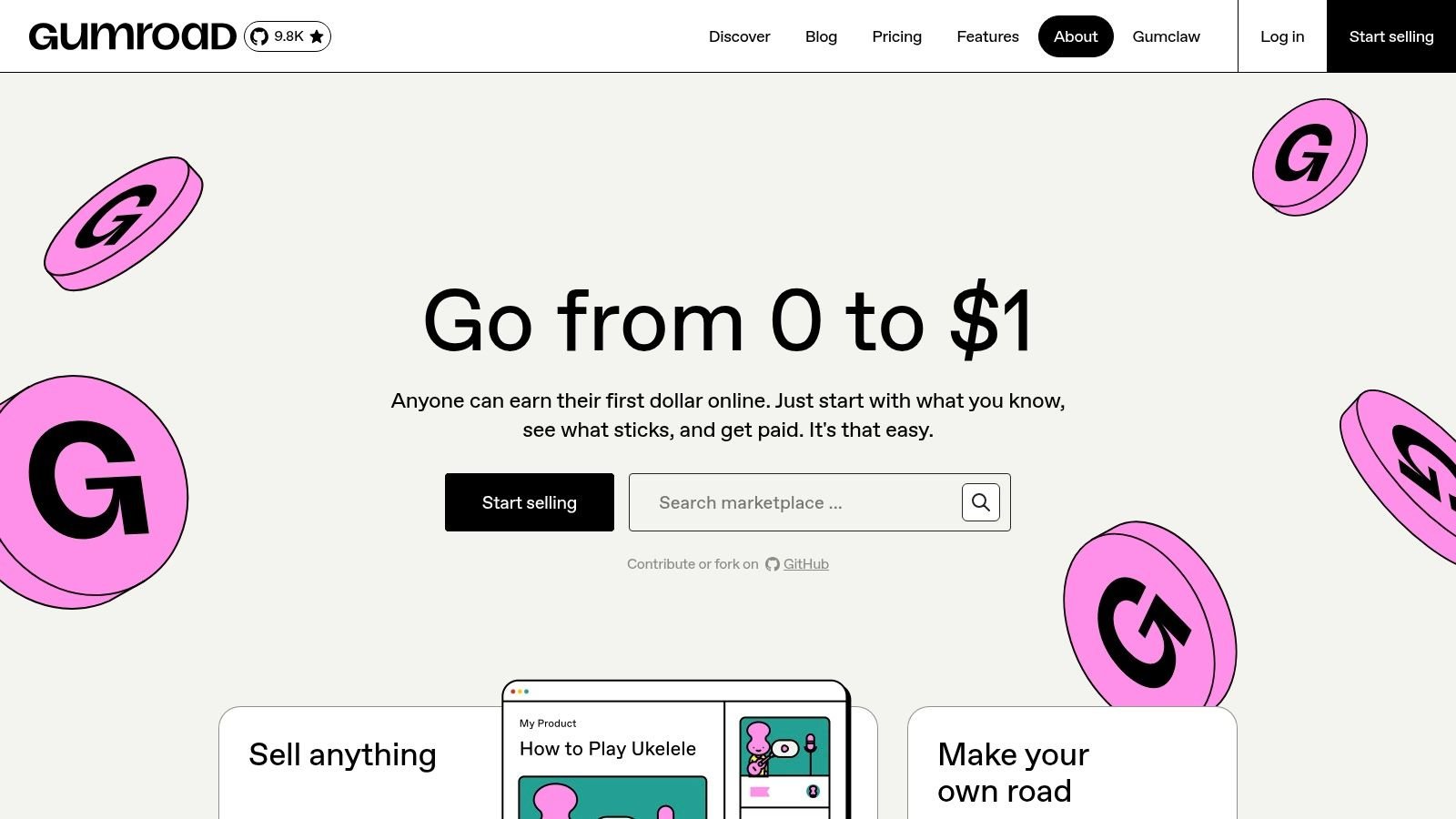
Gumroad stays popular because it gets people selling fast. It is still one of the clearest options for single-product pages, especially for creators who want to publish a download, add a price, and start taking payment without building a full site. For UK and EU sellers, the recent tax handling shift is the headline reason it still matters.
Tax handling changes the calculation
Since 2025, Gumroad handles global indirect taxes, including EU and UK VAT, for creators. That lowers the admin burden for sellers who do not want to manage registration and remittance themselves, especially when the product is digital and the buyer may be outside the seller's home market. Direct sales carry a 10% fee plus $0.50 per transaction, while Discover sales carry a much higher 30% fee including processing.
What makes it useful in practice
Gumroad supports one-time payments, subscriptions and pay-what-you-want pricing. It also has an optional discoverability layer through Discover, which can help if the seller values reach more than branding control. The product page format is simple enough for most buyers to understand immediately, which is useful when the offer needs to travel through social profiles, email and direct links.
For sellers who want a more structured path into digital product selling, the AmaJova guide to selling digital products is a useful companion read.
3. Payhip
Payhip is a strong UK-facing choice because it puts VAT handling front and centre without making the setup feel heavy. It supports digital downloads, courses, memberships, coaching and even physical products, so it works well for sellers who want one place for a mixed offer stack. The free tier is especially appealing when the seller wants the whole feature set available before paying for a higher plan.
Why it fits UK and EU sellers
Payhip automatically collects and remits EU and UK VAT, with configurable tax settings on top. That aligns well with the reality of UK online selling, where checkout clarity and saved order records matter. It also accepts PayPal and card payments through Stripe, so the seller can meet common buyer expectations without needing a separate checkout layer.
What to watch
The main trade-off is that lower tiers carry platform transaction fees until the seller moves to Pro. Payment processor fees still apply too, so the total cost needs checking against expected order value and volume. For a solo creator or small business, that may still be simpler than building tax handling and product delivery separately.
What stands out here is not branding polish, but operational simplicity. For many sellers, that's the difference between publishing this week and staying stuck in platform research.
4. Podia
Podia suits sellers who want courses, downloads and memberships in one roof without stitching together five tools. It's a practical choice for educators, coaches and creators whose offers are likely to evolve beyond a single file. The platform handles automatic tax calculation in supported jurisdictions, including EU VAT OSS and IOSS, while the seller still remains responsible for collection and filing.
Why it appeals to multi-offer businesses
Podia lets sellers use one-time payments, payment plans and subscriptions. That flexibility matters when the catalogue includes a low-ticket download and a higher-value course or coaching package, because the same platform can support different buying behaviours without forcing a redesign. It also reduces the need for separate site, checkout and learning tools.
The limitation to keep in mind
Podia is not a Merchant-of-Record, so tax registration and filing don't disappear. Detailed pricing also needs a current check before commitment, because the live plan pages are the source of truth. Even so, the platform is easy to launch and is often enough for sellers who want a creator business rather than a technical ecommerce project.
For a broader platform planning framework, the AmaJova online selling platform guide is worth a look.
5. SendOwl
SendOwl is a delivery-first tool, not a full storefront replacement. That makes it useful for sellers who already have a site, landing page or audience and need reliable digital fulfilment with fewer moving parts. It is especially strong where access control matters, such as files, license keys, drip delivery and high-value downloads.
Where it earns its keep
The platform offers expiring links, license keys and drip delivery, which helps reduce link sharing and keeps access tied to the order. It also has EU and UK VAT configuration guidance plus reporting options, but the seller still handles registrations and filings. That makes it better for teams that already have a tax process, or at least a clear accountant-led setup.
Cost structure and fit
SendOwl uses flat monthly plans with no per-sale platform commission. That makes costs easier to predict, especially when order value rises or when the seller wants to avoid revenue-share surprises. The trade-off is that it depends on Stripe or PayPal for payments, so processor fees sit outside the platform.
6. Sellfy
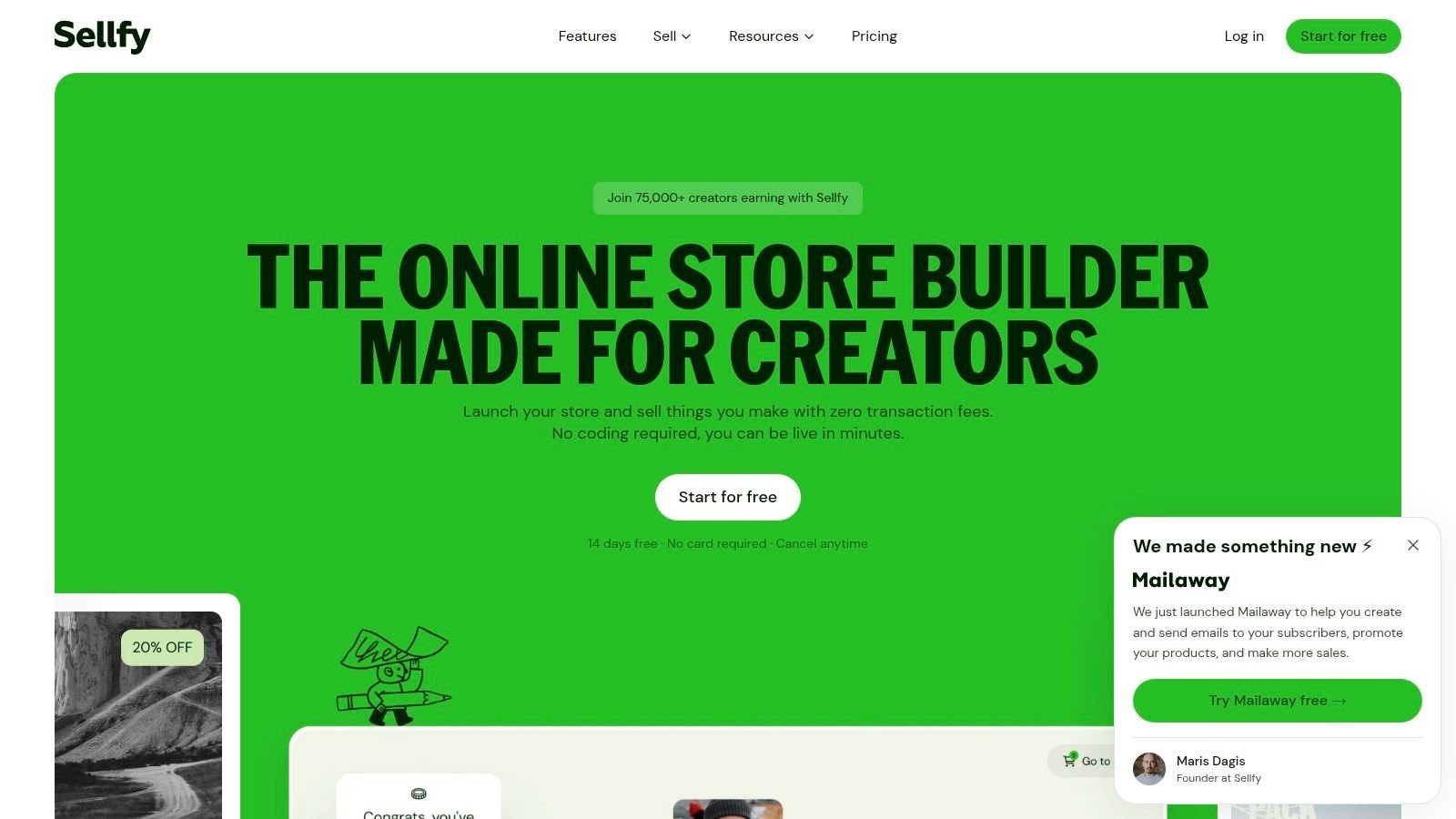
Sellfy works well for creators who want a brandable hosted storefront without building a separate website first. It supports digital downloads, subscriptions and print-on-demand, so it has a broader merchandising shape than many digital-only tools. The setup feels quick, and the storefront is simple to customise and embed.
Why it works for practical sellers
Sellfy includes automatic secure download delivery and file hosting, which removes the need for separate storage and fulfilment handling. It also provides tax tools, including EU and UK VAT rates and VAT report exports, which helps when the business sells into more than one market. That's useful for sellers who want tax visibility without pretending the platform is filing for them.
The catch
Sellfy is not a Merchant-of-Record, so the seller still has to register and remit where required. Paid plans are also required, so it's not the best option for people who want to test with no monthly cost. Still, for a simple store with a clear brand and mixed merchandise, it does the job cleanly.
For examples of the kinds of products that work on a store like this, see digital product examples.
7. Lemon Squeezy
Lemon Squeezy is built around the Merchant-of-Record model, which is why many digital sellers look at it first when compliance is a headache. It collects, files and pays VAT and sales tax on the seller's behalf, which is a major operational advantage for digital goods, software, subscriptions and licenses. That puts tax handling, receipts, fraud and payouts into one system.
What the model buys the seller
It supports 16 to 20+ payment methods, 90+ currencies and global payouts, which matters when the audience is spread across markets. It also includes built-in email, coupons, bundles, upsells and abandoned-cart recovery, so it covers the basic sales journey well. For a seller who wants tax work off the plate, that's the main attraction.
Where the trade-off sits
The fee is 5% plus $0.50 per transaction, so high-volume sellers need to compare that cost against a DIY stack very carefully. At lower volumes, though, avoiding tax admin and reducing operational complexity can easily outweigh the per-transaction hit. For many UK creators, that's the point where the platform earns its place.
8. Shopify + Digital Products app
Shopify is the choice for sellers who want the ecommerce engine first and the digital product feature second. With the free first-party Digital Products app, files and links can be tied directly to products and delivered automatically after purchase. That's useful when digital SKUs sit beside physical stock, subscriptions or multi-channel sales.
Why it makes sense for bigger operations
Shopify has a large app ecosystem, so a seller can add licensing, subscriptions, VAT tools and other extensions as the business grows. It also scales cleanly from simple downloads to more complex catalogues. If a seller needs one system for digital and physical goods, Shopify is often the most flexible base.
The limitation
The trade-off is cost and complexity. Shopify itself is a paid plan, and extra apps often add more spend and more maintenance. For a seller with a few downloads and no broader ecommerce plans, that's usually too much platform for too little output.

9. WooCommerce with EU VAT tools
WooCommerce is the most open-ended option here because it runs on WordPress and can be shaped around almost any digital selling model. It supports downloadable products with access control and download logs, and the official EU VAT Number extension helps validate VAT IDs and apply exemptions. That makes it powerful for sellers who want ownership and don't mind managing the stack.
The upside of control
For teams that already live in WordPress, WooCommerce can be cost-efficient and highly extensible. Hosting, themes and extensions are separate decisions, so the business can keep tight control over the site, the data and the customer journey. That flexibility is a major reason it stays relevant for technical sellers and brands that need custom workflows.
The responsibility that comes with it
WooCommerce is not a Merchant-of-Record, and the seller has to manage hosting, updates and VAT registrations or filings. That means more moving parts, more maintenance and more risk if nobody owns the system properly. It's best when the seller wants ownership more than convenience.
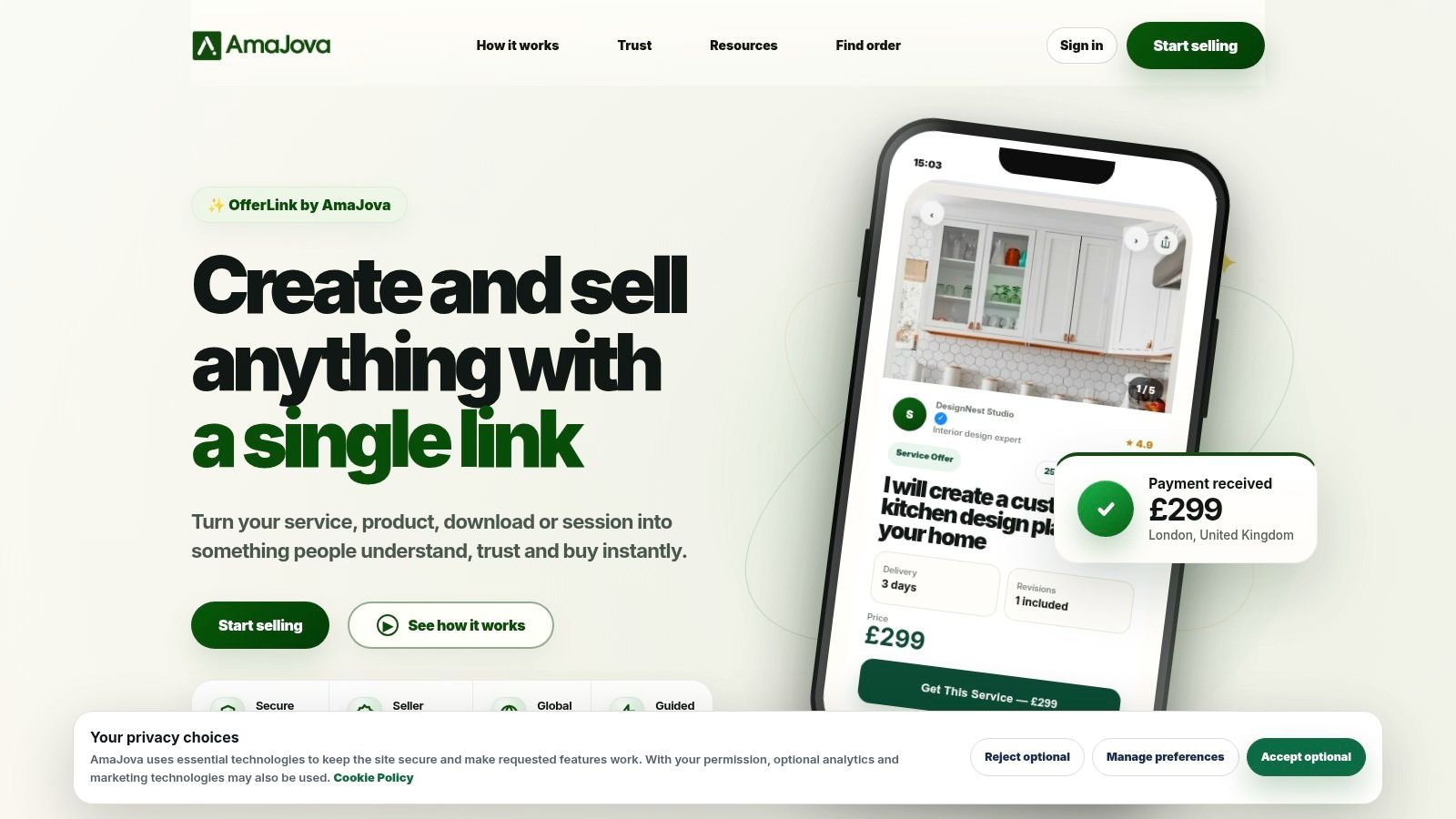
10. AmaJova
AmaJova takes a different route from most storefront tools because it turns the sale into a single, shareable OfferLink rather than a traditional catalogue. That matters for people selling services, physical products, digital downloads or live sessions, because the buyer sees the scope, price and fulfilment details before paying. For small businesses that care about trust, that clarity can remove a lot of pre-sale confusion.
Why the OfferLink model stands out
The platform ties messages, delivery steps, timelines, payment records and dispute status to one order page. That creates a cleaner support trail than a setup where checkout, email and fulfilment live in separate systems. AmaJova also supports global selling in 150+ currencies, includes seller verification and trust signals, and offers buyer and seller protection resources with reporting routes.

Where it fits best
AmaJova is strongest when a seller wants to avoid building and maintaining a full storefront for a single offer or a small set of offers. It is less suited to large multi-product catalogues, but that's also the point, it is designed to keep the buying path clear and the order record intact. For sellers who package expertise, files and live support together, that can be more valuable than a sprawling store.
The platform is operated by AMA JOVA LTD, registered in England and Wales, and it positions transparency and security as part of the buying journey. An optional Buyer Service Fee is disclosed at checkout where applicable, which is important because buyers should know the full order cost before payment.
Top 10 Digital Product Platforms
| Platform | Target audience | Tax & payouts | Core features | Fees & pricing | Standout |
|---|---|---|---|---|---|
| Ko-fi Shop | Creators testing offers, tip/membership sellers | Not MoR, creators handle VAT/sales tax | Digital delivery, simple shop, tips, memberships, commissions | 5% platform fee + payment processor fees | Extremely fast setup; combines tips + shop |
| Gumroad | Digital creators selling downloads, subscriptions | Platform handles indirect taxes incl. EU/UK VAT (since 2025) | One‑time, subscriptions, pay-what-you-want, Discover marketplace | Direct sales 10% + $0.50; Discover higher (≈30%) | No monthly fee; built‑in tax handling |
| Payhip | Creators wanting an all-in-one shop (UK/EU focus) | Automatic EU/UK VAT collection/remittance | Unlimited products, Stripe & PayPal, tiered pricing, free tier | Platform fees on lower tiers; processor fees apply | Full feature set on free tier; UK VAT support |
| Podia | Course creators, coaches, digital sellers | Auto tax calculation (you remain responsible for filing) | Courses, downloads, coaching, bundles, subscriptions | Tiered plans (check site) | Replaces LMS + site + checkout; easy setup |
| SendOwl | Sellers needing robust digital delivery controls | VAT guidance only, you handle filings | Expiring links, license keys, drip delivery, checkout layer | Flat monthly pricing, no platform revenue share; processor fees | Strong delivery protection; predictable costs |
| Sellfy | Creators wanting a brandable storefront + POD | VAT tools & reports; seller files/remits | Secure downloads, file hosting, POD, tax reports | Paid plans (≈$22/mo+); processor fees | Quick setup, good merchandising & POD support |
| Lemon Squeezy | Sellers wanting Merchant‑of‑Record (MoR) service | MoR: collects, files and remits VAT/sales tax for you | MoR compliance, many payment methods, subscriptions, upsells | 5% + $0.50 per transaction; no monthly fee to start | Minimal compliance overhead; handles tax & receipts |
| Shopify + Digital Products app | Sellers needing full ecommerce & multi-channel sales | Tax via apps/extensions; merchant/payout terms depend on plan | Hosted store, Digital Products app, large app ecosystem | Shopify plan + possible app costs | Scalable multi-channel platform with many integrations |
| WooCommerce + EU VAT tools | Businesses wanting ownership, flexibility & extensibility | You manage VAT registrations/filings; VAT plugins available | Open-source WP plugin, downloadable products, plugins | Core free; hosting, themes, extensions cost extra | Full control over data, extensibility & costs |
| AmaJova | Creators, freelancers, coaches & small businesses selling single OfferLinks | Global payments (150+ currencies); payout clearance varies by seller level; fee details in Fees & Payouts doc | OfferLink pages, secure checkout, end‑to‑end order record, guided setup, verification & Seller Growth Program | Variable fees and payout timelines by seller level; transparent fee disclosure on checkout | Recommended, single shareable OfferLink, clarity before payment, unified order record and seller verification |
Choosing a Platform You Can Keep Running
The best platform to sell digital products is rarely the one with the most features. It's the one that fits the seller's compliance setup, the shape of the offer and the amount of admin they can realistically keep up with after launch. A creator selling a few downloads has very different needs from a coach selling sessions, a teacher selling courses or a business selling both digital and physical goods.
For UK sellers, the compliance question deserves more weight than it usually gets. Buyers expect clear price information, a saved order confirmation and a checkout that doesn't feel improvised, and distance selling rules require pre-contract information plus confirmation in a form the customer can save, such as email on GOV.UK. For digital content, the Consumer Rights Act 2015 also matters because a refund may be due where digital content breaches the statutory right to supply, and that refund must normally be made without undue delay and within 14 days after entitlement is agreed under legislation.gov.uk.
That's why the merchant-of-record split matters so much. Platforms like Lemon Squeezy remove more of the tax workload, while tools like Ko-fi, SendOwl, Sellfy and WooCommerce leave more responsibility with the seller. Payhip and Gumroad sit in a useful middle ground for many digital sellers, especially when speed and simplicity matter more than deep store customisation. Shopify, Podia and Teachable become more compelling once the business needs a broader product system, while AmaJova is strongest when one clear OfferLink and a tightly managed order record is the better fit.
The safest move is still the simplest one. Shortlist two platforms, publish one low-price product, and test the full path from discovery to payment to delivery. Confirm current fees, VAT treatment and payout terms on the provider's own pages, and if tax applies to the offer, check the current HMRC position before publishing. That's the difference between a platform that looks good in a comparison list and one that keeps working once sales start.
If the goal is a clearer, more trusted way to sell offers without building a full storefront, AmaJova is designed for that job. It turns digital products, services and live sessions into a single OfferLink with secure checkout, clear fulfilment details and a connected order record. For sellers who want fewer moving parts and a cleaner buyer journey, it's worth taking a look.