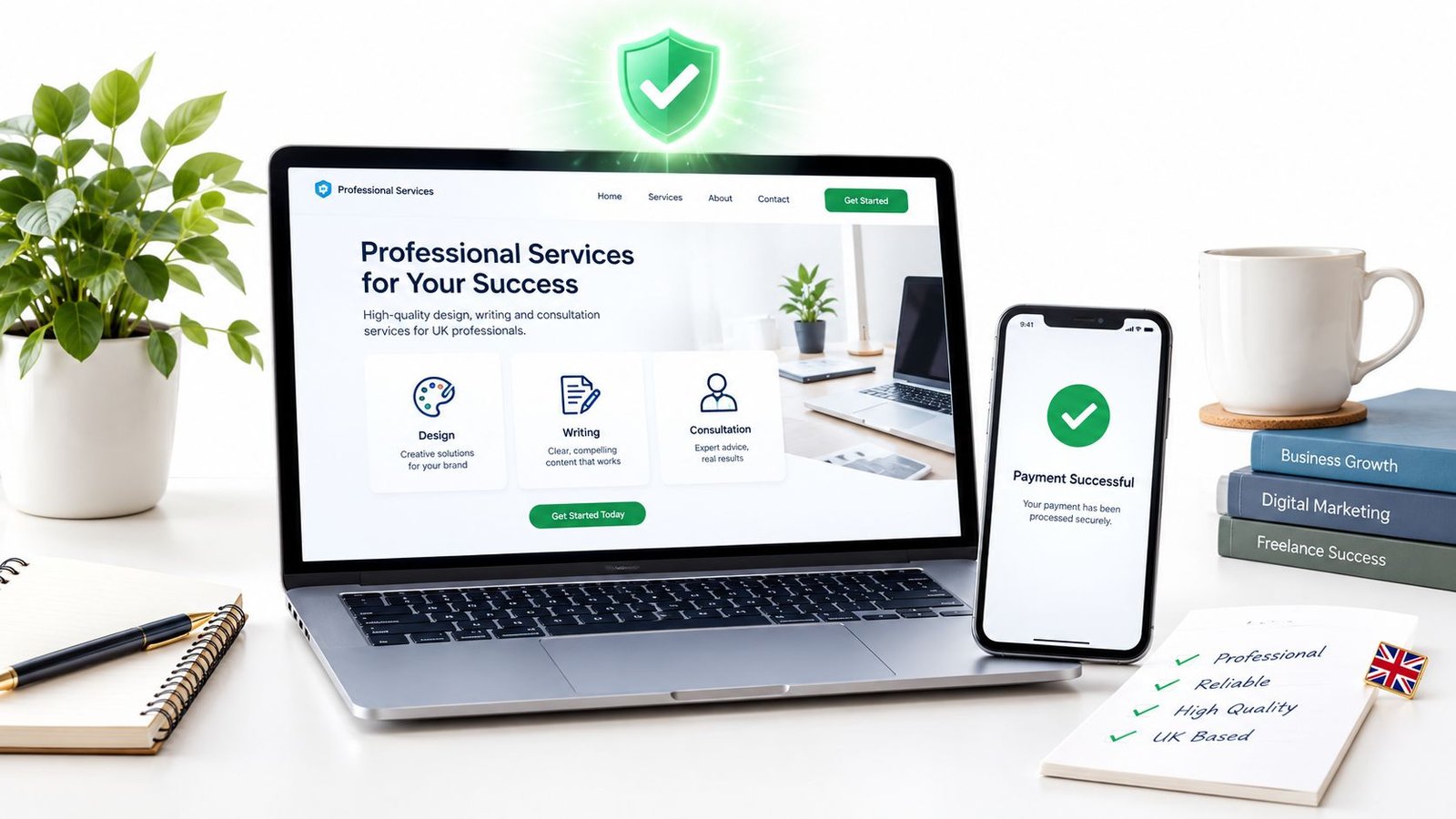
You can have a strong service, a decent price, and a steady stream of enquiries, yet still lose the sale at the point where the buyer asks, “What exactly am I getting, and how does this work?” That hesitation is common when the offer is intangible, because services are bought on trust, not on inspection. In UK online selling, that trust now sits inside a market where online transactions were already material at scale, with total e-commerce sales by UK businesses reaching £693 billion in 2019 and website sales rising sharply by 2021, according to the ONS (ONS e-commerce survey, ONS Digital Economy Survey 2021).
For service providers, the practical lesson is simple. A buyer needs to see scope, price, timing, cancellation terms, and payment in one place, not scattered across DMs, voice notes, and half-finished invoices. That is why a single, structured offer page often works better than a patchwork of messages, and why tools that help escalating order inquiries to agents can be useful when enquiry volume starts to fragment.
Table of Contents
- Why Selling Services Online Is Different
- Understanding the Buyer Journey for Services
- Structuring Clear Service Offers
- Choosing the Right Payment and Checkout Setup
- Building Trust Signals That Reduce Scare
- Designing Repeatable Post-Purchase Workflows
- Common Misconceptions About Selling Services Online
Why Selling Services Online Is Different
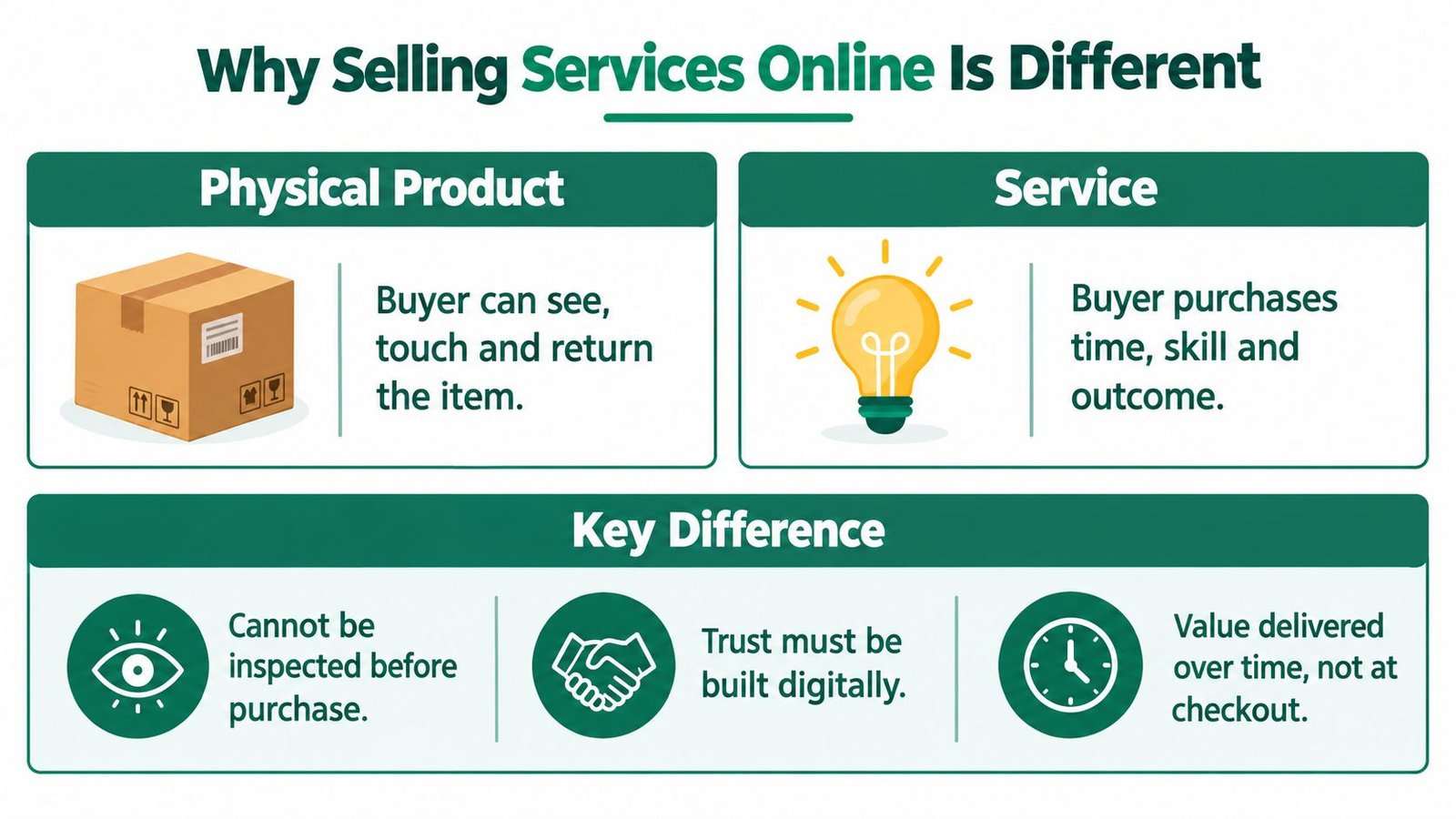
A common mistake is to present a service like a product. A product buyer can judge shape, finish, and packaging before paying. A service buyer can't inspect the result in advance, so the decision rests on confidence, clarity, and how much uncertainty the seller removes before checkout.
That difference matters even more online, because digital selling is no longer a side channel in the UK. The ONS said online spending represented 50.5% of total UK card spending in September 2025, up from 43.7% in September 2019, and average online spend per cardholder was 16.7% above the 2019 average (ONS consumer card spending, ecommerce and digital trade insights). That shift makes a service page less like a brochure and more like a transaction endpoint.
What buyers are actually buying
A physical product sale says, “This item will arrive.” A service sale says, “This outcome will be delivered through someone's time, skill, and coordination.” Buyers are really purchasing a promise, and that promise has to be legible before they commit.
That is why a professional offer page usually outperforms a scattered thread of emails or social media messages. It creates a fixed reference point for the buyer, the seller, and any later support conversation. If the seller later needs to route questions, a platform workflow can help keep those conversations orderly rather than buried in multiple inboxes.
Practical rule: If the buyer cannot restate the offer in one sentence after reading it, the page still needs work.
The same logic explains why service sellers often benefit from a single shareable page rather than a general profile. A page that combines description, pricing, delivery notes, and payment gives the buyer fewer reasons to leave and “think about it”.
Understanding the Buyer Journey for Services
A service buyer usually moves through three checks before paying. First, they decide whether the offer fits the problem. Then they look for proof that the seller can deliver. Finally, they ask whether the purchase feels controlled enough to commit.
That order matters because service sales are built on uncertainty, not shipment. A page has to reduce that uncertainty early, before the buyer starts comparing inbox replies, calls, and half-answered questions.
What the buyer purchases
A physical product sale says, “This item will arrive.” A service sale says, “This outcome will be delivered through someone's time, skill, and coordination.” Buyers are purchasing a promise, and that promise has to be clear before they move on it.
A service page does more than describe the work. It becomes the buyer's reference point, the seller's working script, and the place support teams can return to when questions come up later. In practice, that matters because service buyers often want to know who does the work, what the handoff looks like, and where to ask for help if something changes.
Practical rule: If the buyer cannot restate the offer in one sentence after reading it, the page still needs work.
A single shareable page usually beats a trail of emails or social posts. A page that brings together the description, price, delivery notes, and payment details gives the buyer fewer reasons to leave and “think about it.” In one case, a fixed three-session coaching package with a stated revision window removes most of the back-and-forth that slows payment, because the buyer can see the boundaries before checkout.
The same logic applies to trust. The ONS Digital Economy Survey 2021 showed that website sales reached £459.2 billion across the UK non-financial sector, which helps explain why buyers are comfortable transacting online when the path feels structured and familiar.
Where service pages lose people
The biggest drop-off usually happens before price, not because of price. It happens when scope, deliverables, or turnaround stay vague. A buyer who cannot see what is included will often assume the worst and leave.
Buyers do not need more persuasion when the offer is clear. They need less ambiguity.
Strong service pages win here. Transparent pricing, visible inclusions, and an obvious completion path reduce the mental work required to buy. If the page also makes support routes and fulfilment timing easy to find, the buyer can move from curiosity to checkout without chasing extra detail.
Structuring Clear Service Offers
A service offer should read like a decision, not a puzzle. That means the seller needs to define the scope, the exclusions, the handoff point, and the support route before payment. When those pieces are missing, the buyer fills in the gaps with assumptions, and assumptions are where disputes begin.
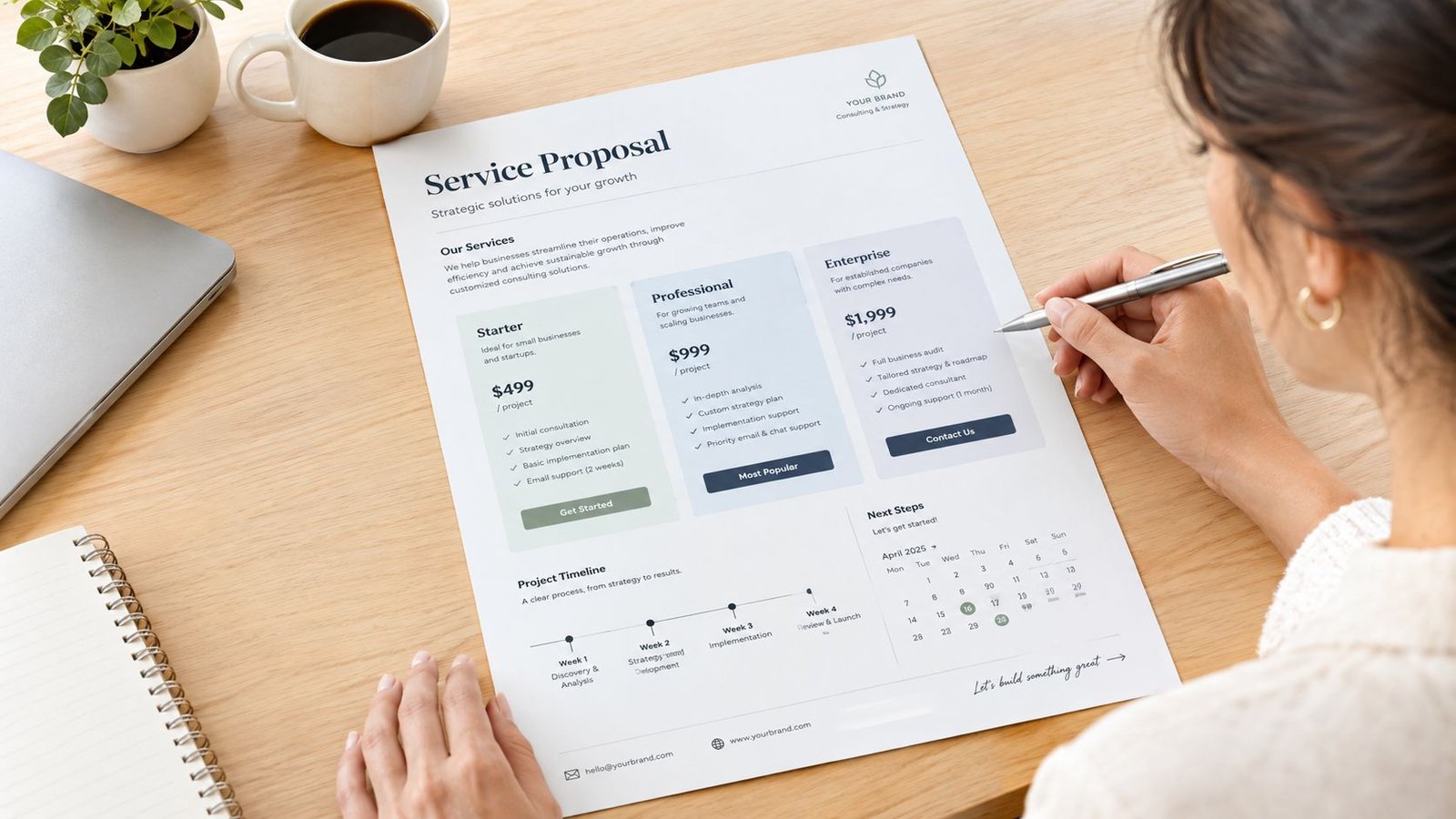
A useful offer page starts with a precise title. Not “consulting”, but what kind of consulting, for whom, and with what result in mind. The same rule applies to coaching, design, copywriting, bookkeeping, tutoring, and live sessions. The buyer should know within seconds whether the page matches the problem they're trying to solve.
Then comes the practical detail. Include what is included, what is excluded, when the work starts, how revisions work, and what the buyer receives at completion. A service that promises “ongoing support” without a response window or boundary invites confusion later.
Use the service page to remove negotiation from the first step. Pricing should sit beside the scope, not behind a discovery call that only exists to reveal basics. For a deeper pricing structure reference, the page on how to price your services is a useful companion when setting the commercial side of the offer.
What a strong offer page includes
- Clear title: State the service and the audience in one line.
- Inclusions: List the exact outputs, sessions, or deliverables.
- Exclusions: Say what is not included, so the buyer doesn't assume it is.
- Timing: Specify when work or delivery begins, and any booking windows.
- Boundaries: Explain revision limits, support channels, and response expectations.
- Cancellation and terms: Set out the relevant rules in plain language.
A page built this way does more than convert. It also reduces the support load after payment, because the buyer has already seen the terms before committing.
Choosing the Right Payment and Checkout Setup
Payment friction kills momentum. A buyer can be ready to hire and still drop off if the checkout feels clumsy, breaks on mobile, or changes the total at the last step. For service sellers in the UK, the payment flow needs to match how people already pay.
UK Finance reported 26.6 billion debit-card payments in 2025, 19.2 billion contactless payments, and 65% of UK adults registered for at least one mobile-payment service in its UK Finance Payment Markets Report 2026 summary. For service businesses, that points to a simple reality: card-first, mobile-friendly checkout is the default expectation for many buyers.
Payment methods for UK service sellers
| Payment Method | UK Transaction Volume | Mobile Compatible | Fraud Protection |
|---|---|---|---|
| Debit card | 26.6 billion payments in 2025 | Yes, if checkout is responsive | Stronger than manual transfer workflows when handled through a proper checkout |
| Contactless card | 19.2 billion payments in 2025 | Yes | Built into card rails, though the seller still needs clean order records |
| Bank transfer | 6.2 billion Faster Payments and other remote-banking payments in 2025 | Yes, but often handled outside the offer page | More manual oversight, less consistent checkout flow |
| Manual invoicing | Varies by invoicing tool | Usually yes, but often fragmented | Depends on the seller's follow-up process |
Source: UK Finance Payment Markets Report 2026.
Manual invoicing still has a place for some buyers, but it often splits the journey across different tools. That creates more room for missed messages, delayed replies, and incomplete order records. A cleaner setup is a unified checkout with a clear order summary, visible totals, and a payment flow that works properly on a phone.
For sellers who want payment links closer to the offer instead of a separate invoicing back end, Streamline client payments with GetBill shows how payment links can reduce the steps between agreement and payment.
The goal is not to add more payment options for their own sake. It is to set up a checkout that feels familiar, loads quickly, and keeps the total visible until the buyer confirms the order.
Building Trust Signals That Reduce Scare
A service buyer cannot inspect the deliverable before paying, so trust has to be built through visible proof, clear terms, and a clean route for handling problems. That is operational work, not decoration. It starts before checkout and continues after payment.
The risk is not abstract. Barclays said 49% of scam claims in early 2025 originated on online or social-media marketplaces, and UK Finance recorded £215.4 million in remote-purchase fraud losses in the first half of 2025, with 1.66 million cases (Barclays scams bulletin). Buyers notice that risk, so they look for signals that the seller is real and the offer is clear.
Trust signals that carry weight
A service page does not need flashy branding. It needs details a buyer can check.
- Verified identity: Show the business name, seller name, or trading details consistently.
- Clear scope and exclusions: State what is included and what is not before payment.
- Written terms: Set out cancellation, delivery, and support conditions in plain language. For a ready-made starting point, use this service agreement template for UK sellers to define those points clearly.
- Visible dispute route: Tell the buyer where to go if something goes wrong.
- Transparent testimonials: Use real feedback with context, not vague praise.
If you are trying to turn proof into revenue, the guidance on turn customer quotes into conversions is useful because it focuses on specificity rather than noise. A few grounded quotes do more work than a wall of generic compliments.
Consumer rules matter too. The Consumer Contracts Regulations generally give consumers a 14-day cancellation period for service contracts and for digital content supplied without a tangible medium (Consumer Contracts Regulations). For online and off-premises selling, the seller must give specified pre-contract information in a clear and comprehensible form before the consumer is bound, and off-premises information must be provided on paper or another durable medium if the consumer agrees (regulation 10, online selling guidance).
Practical rule: Trust signals should reduce doubt, not pretend that verification guarantees quality.
A clear offer and a clear order record support each other. One helps the buyer decide. The other gives both sides the same version of what was agreed.
Designing Repeatable Post-Purchase Workflows
Once payment clears, the real work starts. For service sellers, that is the point where process matters more than promotion. Without a repeatable workflow, the same questions keep coming back, handoff details get missed, and the buyer may discover too late that the scope was understood differently.
A workable post-purchase process starts with a clear acceptance point. The buyer should know when the order is confirmed, what happens next, and where the main record lives. From there, one workflow can keep messages, deliverables, timing, and completion status in a single place instead of spreading them across separate threads.
That operational discipline matters because service-led online sales are becoming more common, and the teams that keep delivery tight will feel the pressure first. A British Chambers of Commerce and Royal Mail-supported study says the share of digital sales among UK consumer-facing businesses is expected to rise from 31% to 38% over the next three years (BCC research). Sellers who can fulfil consistently are better placed for that shift than sellers who rely on improvised messaging.
A simple post-purchase sequence
A repeatable workflow can be built around four messages.
- Welcome message. Confirm the order, thank the buyer, and restate the agreed scope.
- Milestone update. Explain what is happening next and when the buyer will hear again.
- Revision boundary reminder. Make the limits of changes visible before frustration builds.
- Receipt or completion confirmation. Close the loop and record that delivery is done.
The buyer should never have to ask where things stand. The workflow should answer that automatically.
For solo sellers and teams that want a more structured operating record, order management workflow is a useful reference because it keeps messages, delivery steps, and status in one place. The value is not fancy automation. It is reducing the number of places where a mistake can hide.
Repeatable fulfilment beats improvised service delivery because it makes the promise easier to keep.
The best service businesses usually make fulfilment boring in the right way. Buyers do not want drama after payment. They want clear next steps, visible progress, and a finish that matches the offer.
Common Misconceptions About Selling Services Online
A service sale rarely falls apart because the website is too simple. It usually falls apart because the offer is unclear, the buyer does not trust the seller, or the handoff after payment is messy. A single offer page, one checkout path, and a clear fulfilment process are enough to start.
Price creates another common mistake. Lower pricing often increases hesitation because service buyers are trying to reduce risk, not chase the cheapest option. A clear offer with a sensible price usually gives buyers more confidence than a discount that makes the work look thin.
Social media can help people find you, but it does not finish the sale by itself. Buyers still need to know what happens after payment, who replies, and how the work is delivered. GoDaddy's UK research found that 32% of small businesses used social media as their primary customer-acquisition channel, while only 19% sold products or services directly on those platforms. That gap shows how often social is used to start the conversation, not to complete it.
Trust signals matter even more for services than for products. The buyer cannot inspect a finished object, so they need proof before they pay, not reassurance after the money has cleared.

What usually works instead
The stronger setup is plain and controlled. Sell one service with a tightly defined scope, place it on a page that answers the buyer's questions quickly, and make the fulfilment path visible after payment. That approach handles more real-world friction than trying to look bigger than the operation really is.
It also repeats more cleanly. When the offer is clear, the payment flow is trustworthy, and the delivery process is predictable, the business can handle more clients without rebuilding each conversation from scratch. That is the part many sellers miss. The sale is only the start, and the post-payment workflow has to hold up when the work begins.