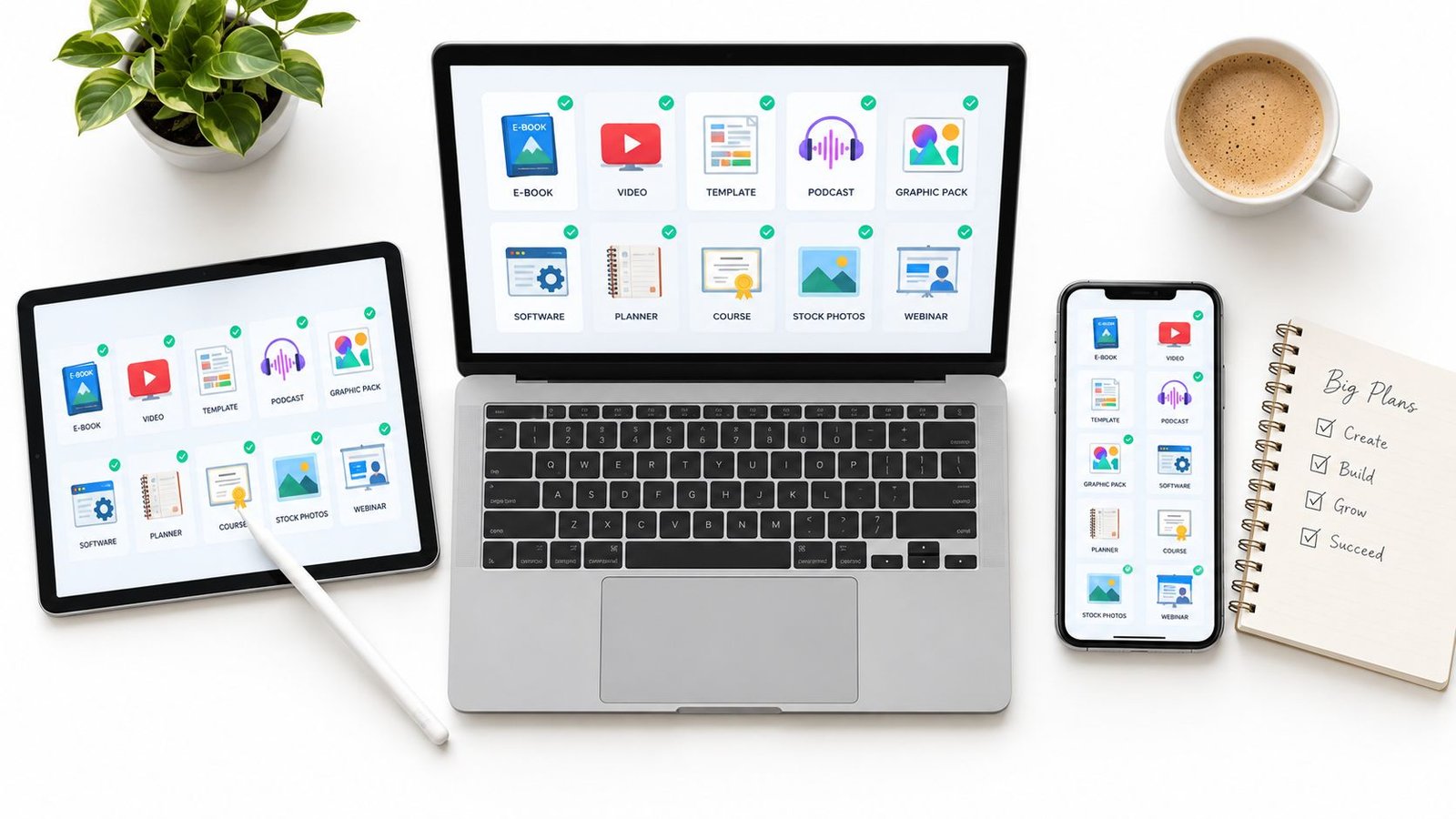

You set a price, publish it, then feel the familiar sting when the first serious buyer hesitates, asks for a discount, or buys and still expects extras. That's the moment most sellers realise the number wasn't a strategy, it was a guess. If you want to how to price your services properly, treat pricing as a system, not a hunch, and build it in five moves, cost floor, pricing model, package structure, market benchmark, and scheduled review.
For UK-based sellers using a structured offer page, the method matters even more because the page itself has to do the persuading before payment. If you want a reality check on how your offer currently looks to buyers, it can help to browse social proof plans and compare how trust signals are presented alongside price. Social proof doesn't fix weak pricing, but it does show how much friction a buyer sees before they commit.
Table of Contents
- The Pricing Problem Most Sellers Underestimate
- Calculate the Cost Floor You Cannot Cross
- Move From Hourly Thinking to Outcome Pricing
- Build a Three-Tier Package That Sells
- Benchmark Against the UK Market Without Copying It
- Raise Prices by Reducing Scope, Not Discounting It
- Publish a Price-Transparent OfferLink
The Pricing Problem Most Sellers Underestimate
The biggest pricing mistake is not charging too little once. It's quoting under pressure, then leaving that number in place while costs, scope and buyer expectations keep moving. A freelancer, coach or small business owner usually notices the problem only after a run of late invoices, unpaid admin, or revisions that swallowed the margin. At that point, the headline price is already lying.
The fix is a five-part method. First, work out the cost floor you cannot cross. Second, choose a pricing model that fits the outcome, not just the clock. Third, package the offer so the buyer can understand it quickly. Fourth, benchmark against the UK market without copying it. Fifth, review the price on a schedule instead of waiting for a bad month to force the issue.
Start with the floor, not the market
Market rates are useful, but they're not the starting point. If the service does not cover the seller's real costs, no benchmark can rescue it. The right question is simple, what does it cost to sell this service sustainably, and what margin is still left after delivery, admin and payment risk?
That logic applies whether the seller is offering a consultation, a digital download, a live session or a physical product with fulfilment costs. A structured offer page, such as an AmaJova OfferLink, is useful because the boundaries, inclusions and completion conditions can sit beside the price before checkout. That clarity matters more than a clever discount.
Practical rule: if the price only works when everything goes smoothly, it's not a real price.
The other mistake is treating pricing as static. UK service prices have moved, buyer expectations have moved, and the offer should move with them. A seller who keeps one number unchanged for months or years is usually subsidising the buyer.
Calculate the Cost Floor You Cannot Cross
A sustainable price starts with a hard minimum. Add the owner income target, employer National Insurance where relevant, pension contributions, software, insurance, accounting, equipment, marketing, bank charges, transaction fees and any other overheads. Then add a contingency buffer of at least 20%, because small businesses rarely run on ideal conditions alone.
Next, strip the year down to genuine billable capacity. Holidays, sickness, training, sales, administration, unpaid discovery calls and downtime between projects all reduce the hours that can be sold. If a seller ignores that gap, the resulting hourly rate looks competitive on paper and collapses in practice.
A simple sequence works better than vague ambition:
- Total the annual revenue requirement. Include personal income, business overheads and the contingency buffer.
- Estimate realistic billable hours. Use actual capacity, not the fantasy version of the calendar.
- Divide revenue by hours. That gives the break-even hourly rate.
- Add profit margin. UK small-business guidance commonly points to a 20–40% profit-margin range, and fixed-price offers should also allow for a 10–20% scope-creep buffer.
- Check the offer against real fulfilment. Include revisions, admin and delivery time, not just the visible work.
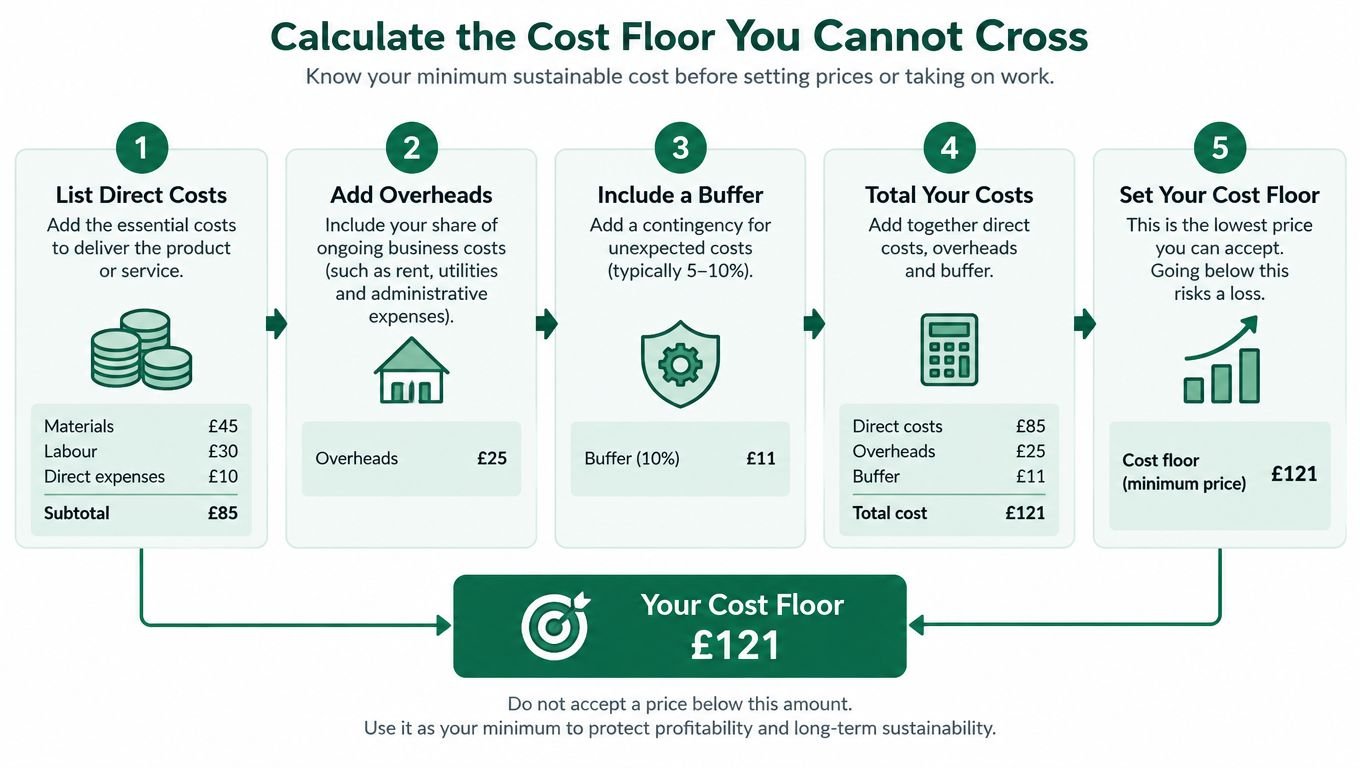
A seller who skips any of those steps usually underprices. A seller who does them properly gets a floor that can be defended in conversation, because it's tied to actual economics rather than guesswork.
For a digital offer build, the same logic works well with a structured page such as this digital product selling guide, because pricing, scope and delivery need to stay aligned.
Move From Hourly Thinking to Outcome Pricing
Hourly pricing works when the scope is uncertain, the buyer wants ongoing access, or the work is hard to define in advance. It fails when the buyer is paying for a result. A coach solving a narrow problem, or a designer delivering a bounded set of outputs, should not hide behind elapsed time if the buyer cares about the outcome.
Strong specialists price the result the buyer wants, not the minutes spent producing it. That may mean a project fee, a day rate, a retainer, or a value-based price. The right model depends on how clear the scope is and how visible the result will be to the buyer.
Pick the model that matches the promise
A project fee works when deliverables are fixed. A retainer fits recurring support. A day rate can work when the buyer wants access to expertise across a known block of time. A value-based price belongs where the outcome has clear business value, because the buyer is paying for the effect, not the effort. For a deeper treatment of the model, read Fluidwave's take on value pricing before you set the number.
That choice changes the wording on the offer page. “Two calls and a summary” is weak. “A defined result, with specific boundaries, revision limits and completion conditions” is stronger because it tells the buyer exactly what they are purchasing. A service agreement template helps keep those boundaries tight, which is why a structure like this UK service agreement resource is worth comparing against the final offer wording.
Hourly pricing still has a place. Use it when the buyer is comparing effort and access. Use outcome pricing when the buyer is paying for clarity, speed, confidence or a measurable result.
A price becomes easier to defend when the buyer can see what it replaces, what it enables, and what it prevents.
That is why outcome pricing usually beats hourly pricing. It ties the number to usefulness instead of labour alone, and it gives you a cleaner base for packaging the work into transparent tiers, optional extras and scheduled price reviews.
Build a Three-Tier Package That Sells
A single price forces the buyer to guess. A three-tier package gives them a path. The best structure is simple, an entry tier with tight scope, a recommended middle tier that does most of the selling, and a premium tier for buyers who want speed, depth or extra support. Done properly, the middle option becomes the natural choice.
The tiers should not be clones with different labels. Each one needs a different promise, because buyers need to see trade-offs clearly. The starter tier should reduce risk and keep delivery narrow. The recommended tier should carry the main value. The premium tier should add convenience, speed or deeper access, not just a bigger price tag.
| Element | Starter | Recommended | Premium |
|---|---|---|---|
| Scope | Narrow and clearly bounded | Full core service | Core service plus extras |
| Turnaround | Standard | Faster or more balanced | Priority delivery |
| Revisions | Tight limit | Moderate limit | Expanded support |
| Support | Minimal follow-up | Defined follow-up window | Higher-touch support |
| Buyer responsibility | Provide inputs and approvals on time | Provide inputs and approvals on time | Provide inputs and approvals on time |
| Optional extras | Not included | Available separately | Included or expanded |
What belongs in each tier
The starter tier should trim the offer, not cripple it. Keep the core outcome, but reduce support, shorten turnaround or narrow the deliverables. The recommended tier should feel complete. The premium tier should absorb the features that cost you time, such as quicker delivery, extra revisions or more direct access.
Optional extras are a quiet revenue lever. They let the buyer add value without forcing you to inflate the base offer for everyone. Common extras include faster delivery, extra revisions, add-on consult time, or a second round of delivery feedback. The key is to state them plainly, before checkout.
Use language that signals professionalism. Name inclusions. State boundaries. Say what the buyer needs to provide. Define completion conditions. That wording reduces friction and avoids the mess where a buyer assumes more support than the price covers.
For sellers building a single-link offer page, a structure like AmaJova's OfferLink format can hold the inclusions, price, fulfilment details and optional extras in one place. For a sales-led page, clarity beats cleverness every time.
Benchmark Against the UK Market Without Copying It
Start with the market, not with your gut. YunoJuno's 2025 Freelancer Rates Report, based on more than 261,000 freelance contracts, recorded an average UK freelance day rate of £390, or about £49 per hour, and a 3% year-on-year rise in the average rate (YunoJuno 2025 Freelancer Rates Report coverage). Use that as a reference point, not a target to copy blindly.
The spread by specialism matters more than the headline average. Strategy professionals averaged £520 per day, market researchers £491, and data specialists £469. The highest-performing 10% earned about £708 per day, or £89 per hour, and that was 9% higher than the previous year. The same report coverage shows the split: generalist offers sit near the centre, while narrow specialist outcomes can command a clear premium.
Use the benchmark as a positioning test
Classify the service by discipline and seniority first. Then adjust for geography, expertise, urgency, complexity and whether the work is one-off or recurring. After that, calculate the implied effective hourly rate once fulfilment, messaging, revisions and payment administration are added back in.
That final step exposes the pricing fiction. Two sellers can quote the same headline price and still earn very different real returns because one carries tighter scope and less unpaid admin. A rate far below the market usually points to hidden costs, weak positioning, or both. A rate far above the market needs a clear explanation of specialist value.
A useful OfferLink page makes that logic visible. The three tiers set the range, the optional extras show what can be added without bloating the base offer, and scheduled price reviews let you adjust the package when your costs, scope or market position changes. That is how you benchmark against the UK market without surrendering control of the offer.
Short rule: if the benchmark only works after you ignore admin, revisions and cash-flow delay, it is not a benchmark you can use.
Raise Prices by Reducing Scope, Not Discounting It
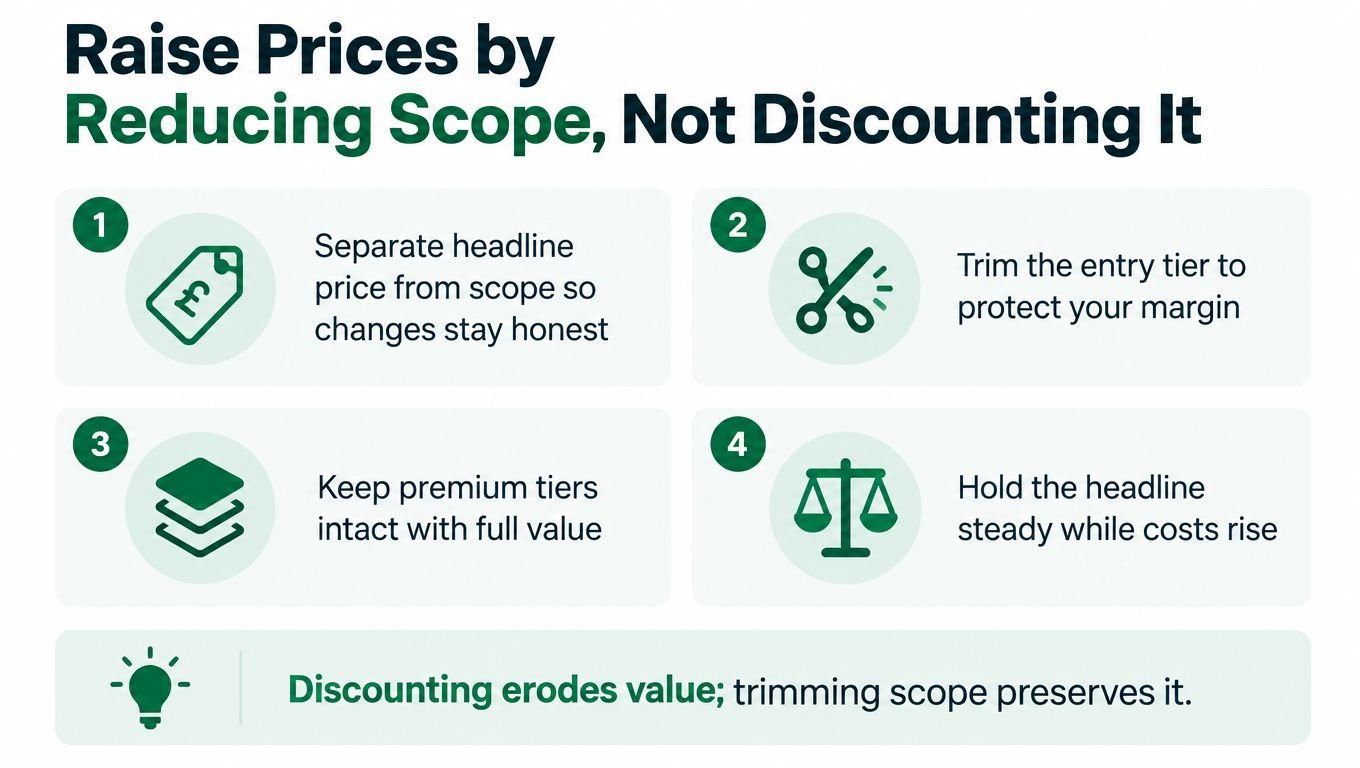
When costs rise, most sellers reach for the wrong lever. They push the headline up and hope buyers stay put, or they hold the price and absorb the pain. A cleaner move is to separate price from scope. Keep the headline steady where you can, and trim the entry tier before you slash the number.
That approach is easier to sell because the buyer sees a deliberate package change, not a random hike. A coaching offer is the clearest example. If the entry tier used to include two 60-minute calls and a detailed written summary, the revised version might offer one 45-minute call and a shorter summary, while the recommended and premium tiers keep the fuller experience. The buyer still gets a genuine option at the lower point, but the margin is protected.
The UK context makes this important. A recent survey of 750 UK small-business owners found that 47% named raw materials, supplies and products as their greatest cost factor, while 24% were lowering prices to retain customers and 25% were increasing prices to protect profit margins (SumUp UK Business Confidence Report 2025). Separately, the ONS reported that 22% of trading businesses in early August 2025 cited labour costs as a reason for considering price increases (ONS trading business commentary). Freezing prices while costs rise is not customer-friendly, it is a slow-margin leak.
Raise the right part of the offer
Existing buyers should not be surprised. Give notice when the contract allows it, and grandfather current customers onto the old rate where that keeps relationships stable. New buyers should see the revised offer page first, not a surprise charge at the point of payment.
The better communication pattern is simple. State the revised inclusions. Explain the changed scope, delivery speed or support level. Keep the wording matter-of-fact. Buyers usually accept price changes more easily when they can see what changed in the offer, not just the number.
Price testing should be treated like a controlled experiment. Use a 30 to 60 day window, change one variable at a time, and watch enquiry-to-purchase conversion, average order value, refund or dispute rates, repeat purchase behaviour and the share of buyers choosing the recommended tier. A low-volume service does not need perfect statistical drama to learn something useful. A couple of lost enquiries is noise, not a verdict.
Scheduled reviews matter just as much. Tie them to the calendar every six or twelve months, then anchor the decision to service inflation, cost changes and buyer response. The worst price is the one that was right last year and is wrong now.
Publish a Price-Transparent OfferLink
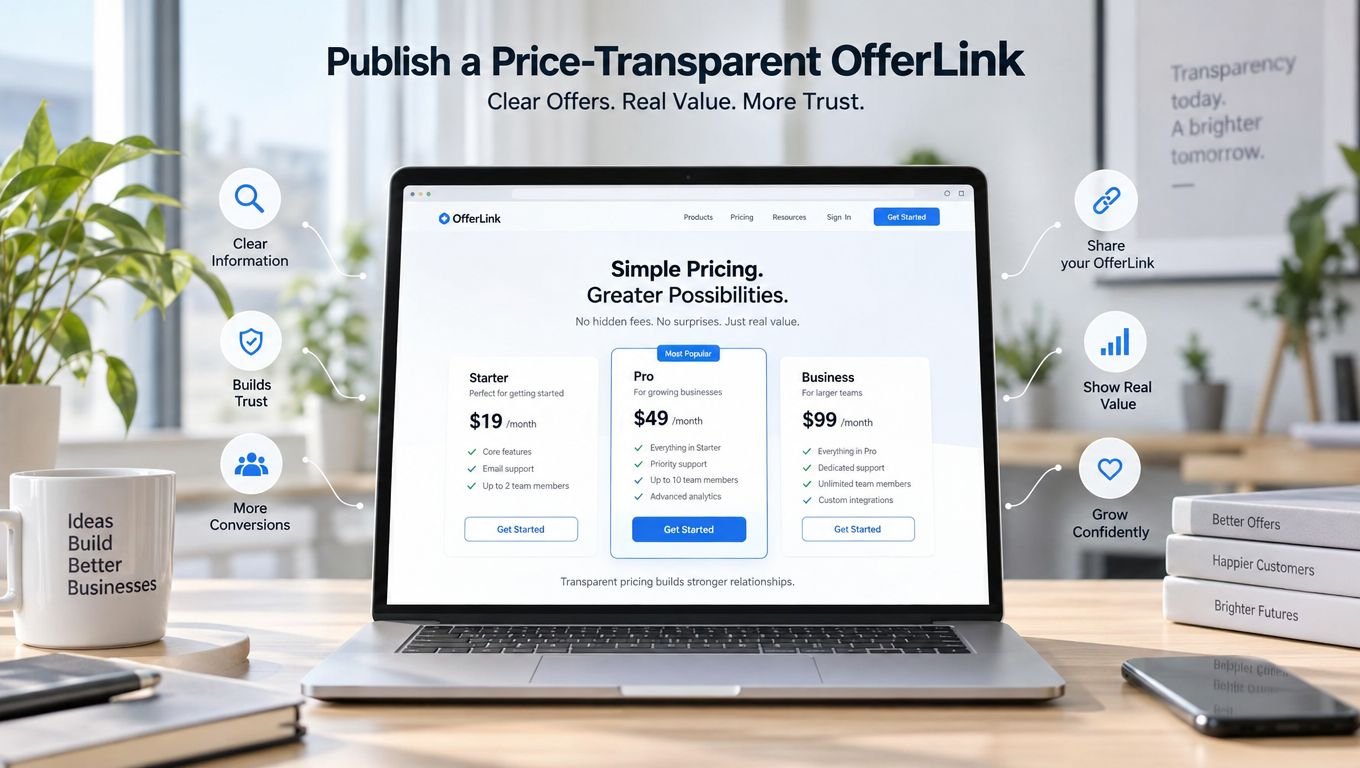
A good price on a confusing page is still a bad offer. The buyer needs to see the package, the scope, the price and the boundaries before checkout, not after confusion has already set in. That's where a structured offer page matters, because it puts the business case in front of the buyer in one place.
For UK consumers, the Competition and Markets Authority expects mandatory charges to appear in the headline total, including unavoidable booking, delivery, tax and other fees, and hiding unavoidable fees until checkout can amount to illegal drip pricing (CMA price transparency guidance). That means the service page should show the full compulsory price up front, with optional extras kept clearly optional.
VAT also needs attention as the business grows. HMRC says a UK business must generally register for VAT when taxable turnover exceeds £90,000 over the previous 12 months, and registration must happen within 30 days of the end of the month in which the threshold was exceeded (HMRC VAT registration guidance). That's a rolling turnover test, so the page shouldn't assume one VAT treatment forever.
What the page should show
The offer page should make the following visible before payment:
- Tier names and inclusions. Starter, recommended and premium should be clear.
- Headline price and compulsory charges. No surprises at checkout.
- Turnaround and fulfilment details. Say when and how delivery happens.
- Revision limits. State how many edits are included.
- Buyer responsibilities. Specify what the buyer must provide.
- Optional extras. Make them easy to choose, but never compulsory.
Late payment risk should also sit inside the pricing logic, not outside it. UK businesses owed an average of £17,000 in late payments in 2025, while freelancers were reported to have an average of £5,230 outstanding, so deposits, milestone payments or deliverable-based pricing are not luxuries, they're cash-flow controls (late payment analysis). The point isn't to inflate the headline. The point is to protect realised revenue.
A solid publication checklist is blunt. Cost floor calculated. Pricing model chosen. Tiers drafted. Market position checked. Review date set. Offer page written in clear, scope-led language. That's the whole job.
A structured page such as AmaJova's online selling platform overview fits this kind of offer because the price, the scope and the fulfilment record can stay connected instead of drifting apart.
If the current price still feels improvised, stop guessing and tighten the offer. AmaJova gives sellers a way to present services, products, digital products and live sessions in one clear OfferLink with checkout and order details attached, which makes pricing easier to explain and easier to follow through on. Visit AmaJova, publish a clearer offer, and put a proper pricing system behind it.