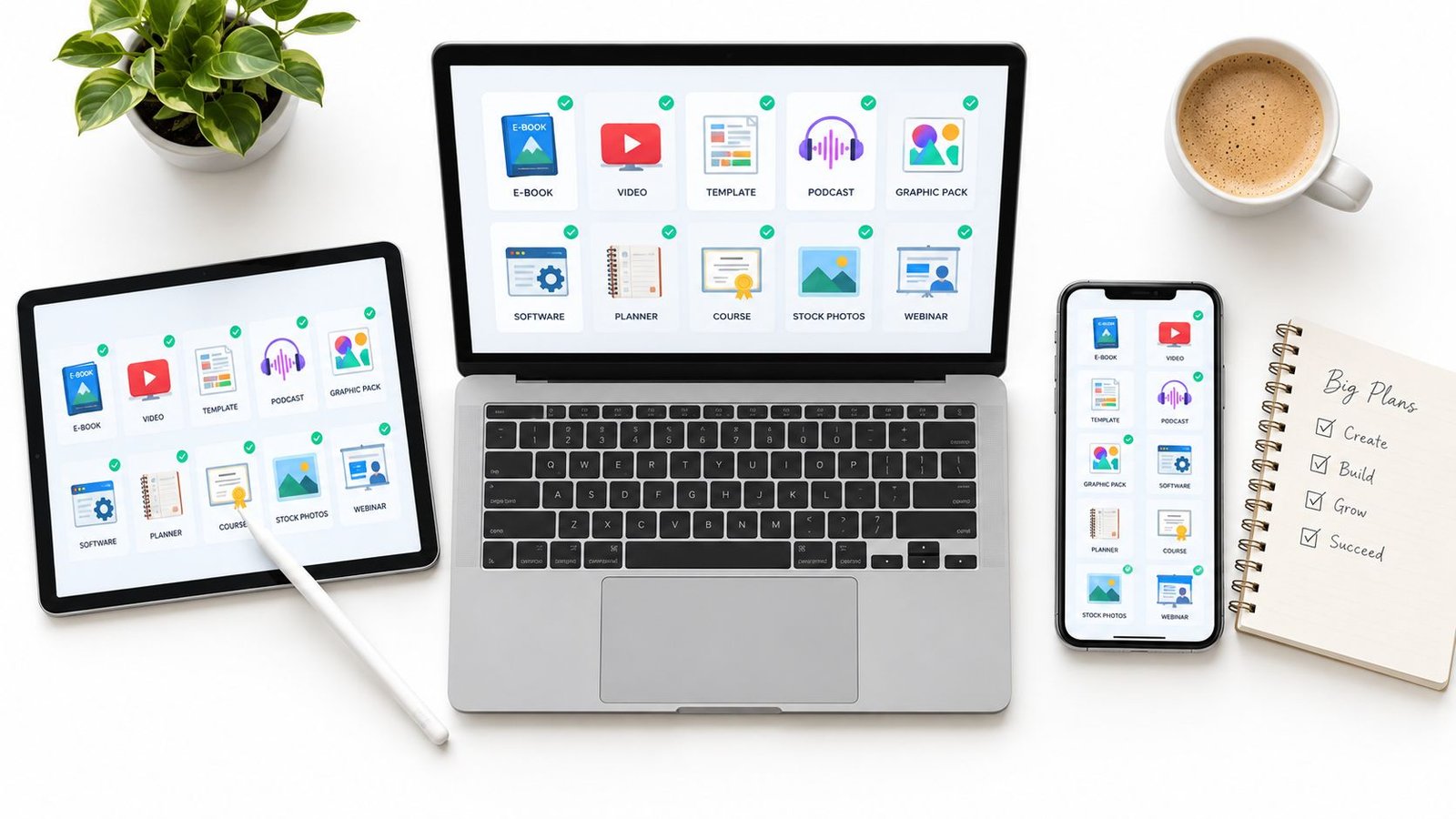
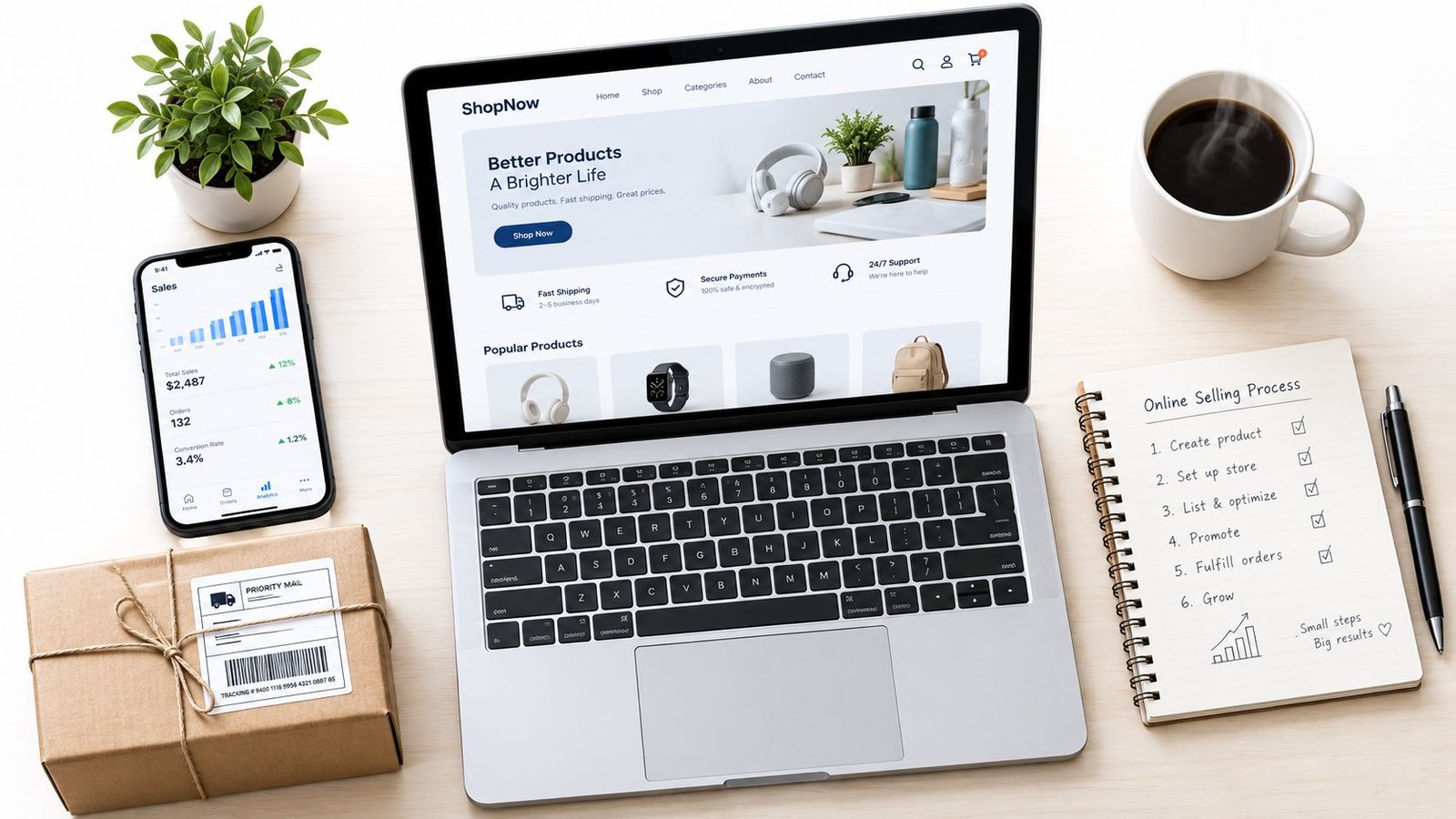
A seller can have a polished Instagram profile, a handful of interested messages, a spreadsheet of prices and an informal invoice ready to send, yet still lose the sale before payment. The buyer may not know exactly what's included, when delivery happens, whether the price includes every charge or where support continues after checkout.
That is the true challenge behind selling online how to. Success doesn't come from publishing a listing and hoping traffic does the rest. It comes from connecting the offer, payment, fulfilment, records and support into one dependable journey for products, digital products, services and live sessions.
Table of Contents
- Why Selling Online Requires a Unified Approach
- Choosing What to Sell and Building Your OfferPage
- Pricing Strategically and Optimising Checkout Flow
- Managing Fulfilment and Order Records Efficiently
- Providing Customer Support that Prevents Disputes
- Marketing Your OfferLink to Drive Conversions
- Navigating UK Compliance and Next Steps for Growth
Why Selling Online Requires a Unified Approach
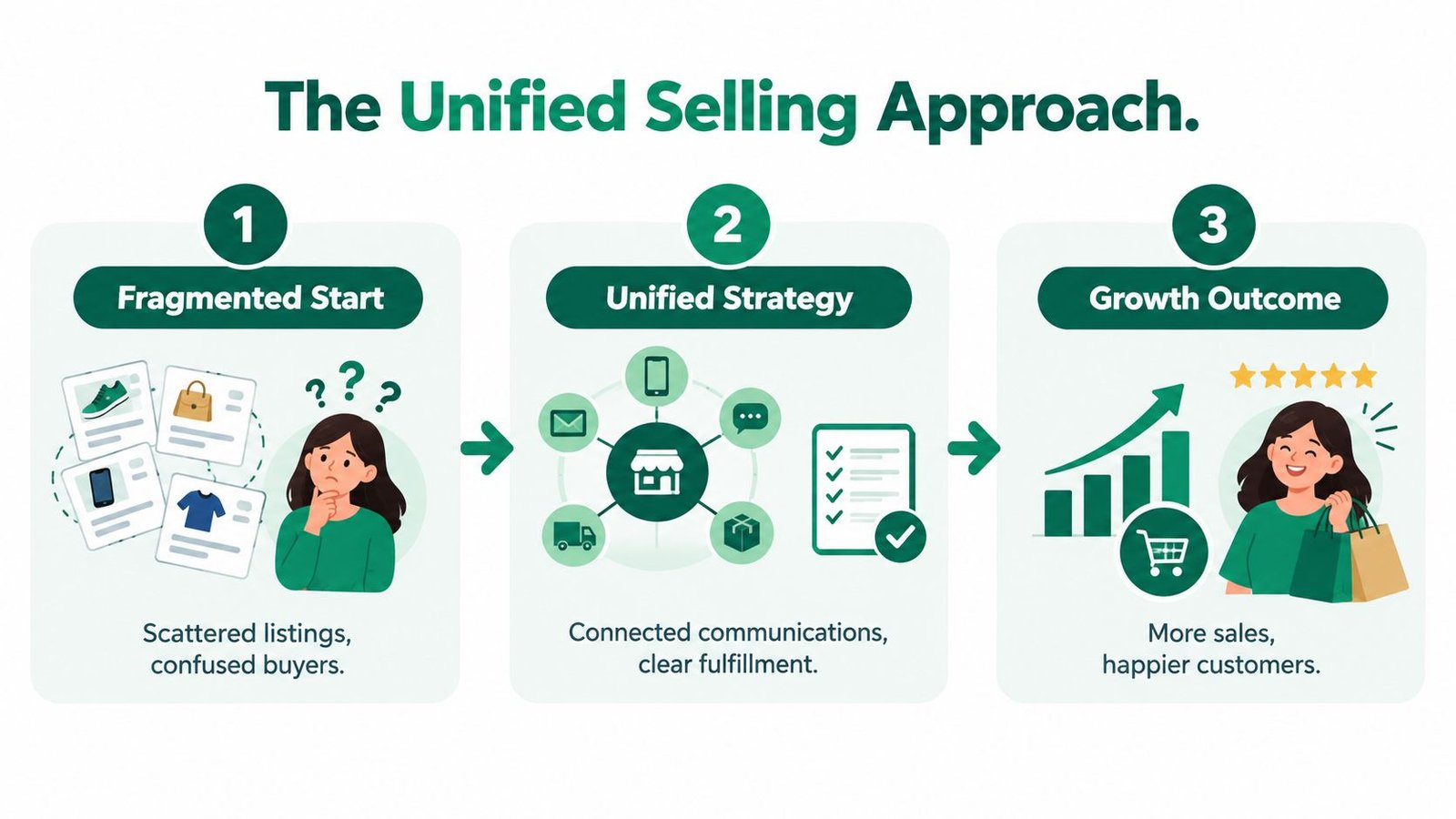
Fragmented selling usually begins innocently. A freelancer shares a service in a social post, answers questions in direct messages, sends a separate payment request and later tries to remember which version of the scope the buyer accepted. A creator promotes a digital download through an email, explains access in another message and stores the customer's details somewhere else. A small retailer may have listings on several channels, each with slightly different delivery information.
The buyer experiences this as uncertainty. They have to assemble the offer themselves, ask for missing details and decide whether the seller will manage the order properly after payment. Every extra handover creates another opportunity for confusion.
The UK market has moved well beyond the stage where being online is not enough. The Office for National Statistics internet sales series records internet sales at 27.3% of total retail sales in August 2026. Online checkout is now a core part of purchasing behaviour, so customers expect clear product pages, straightforward pricing and a fast route to payment as normal standards.
One offer should have one source of truth
A unified offer page gives the buyer one place to understand:
- The outcome: What the customer receives, not just the name of the service or item.
- The scope: What's included, what isn't included and what the buyer must provide.
- The price: The amount due, any applicable charges and the available payment route.
- The timing: Dispatch, download access, appointment details or expected completion.
- The next step: What happens immediately after payment and how the buyer can ask for help.
An OfferLink page can serve that purpose by bringing the offer description, checkout and order context together. It doesn't replace thoughtful selling, accurate fulfilment or responsive support. It gives those activities a shared reference point.
Practical rule: If a buyer needs to search through a message thread to understand what they purchased, the offer was under-specified before payment.
This approach also improves the seller's side of the transaction. A physical order needs delivery details and dispatch tracking. A digital product needs access instructions and a record of what was supplied. A service needs boundaries, milestones and communication expectations. A live session needs booking information, joining instructions and a clear policy for changes.
The important shift is from managing scattered conversations to managing a complete transaction. The rising online share described by the ONS means professionalism is judged at every stage, not only on the landing page. Sellers who reduce ambiguity before checkout give buyers fewer reasons to pause and themselves fewer problems to untangle later.
Choosing What to Sell and Building Your OfferPage
Before choosing software, decide what the customer is buying. The same audience may be interested in a physical product, a downloadable resource, a one-to-one service or a live workshop, but each offer demands different preparation and creates different delivery obligations.
A useful test is simple: can the seller describe the buyer's result, the exact contents and the delivery method without adding a long explanation in private messages? If the answer is no, the offer needs more definition before it needs more promotion.

Match the offer to delivery capacity
A physical product may look straightforward, but the seller still needs accurate dimensions, condition details, stock information, packaging expectations and a realistic dispatch process. A digital product needs a tested file, clear access instructions and a description of the format. A service needs a defined outcome, working method, customer responsibilities and limits on revisions or contact.
Live sessions create a different set of questions. The page should identify the session format, booking process, duration, preparation required, technology expectations and what happens if the customer can't attend. A vague promise such as “personal coaching session” leaves too much room for different interpretations.
A clear OfferPage should contain the following information:
- Specific title. Name the item or outcome in language a buyer would recognise.
- Useful description. Explain who the offer suits, what it solves and what the customer receives.
- Inclusions and exclusions. State the deliverables, quantities, formats and boundaries.
- Price and payment context. Show the amount due and explain any applicable optional charge before payment.
- Fulfilment details. Describe dispatch, download access, booking or completion timing.
- Frequently asked questions. Answer the questions that repeatedly appear in messages.
- Proof and media. Add relevant photographs, previews, examples or portfolio material.
- Support route. Tell the buyer how to raise a question or report a problem after ordering.
For digital products, sellers can also use the step-by-step guide to selling digital products to shape the offer around the actual customer journey rather than treating the download as the entire product.
Define the boundary before taking payment
A service page should say whether calls, written feedback, implementation, follow-up messages or revisions are included. A product listing should disclose defects, compatibility limitations and delivery conditions. A live session should make attendance and rescheduling expectations visible. These details aren't administrative decoration. They prevent a buyer from paying for one interpretation while the seller delivers another.
The final test is to hand the page to someone unfamiliar with the offer. If that person can explain what they'll receive, how they'll receive it and what they need to do next, the offer is ready for checkout.
Pricing Strategically and Optimising Checkout Flow
Pricing has two jobs. It needs to support the seller's costs and time, but it also needs to communicate what the buyer is purchasing without forcing them to calculate the final commitment.
A practical price review starts with the full delivery burden. Physical sellers should account for packaging, dispatch handling, returns and support. Service providers should include preparation, delivery, administration and reasonable aftercare. Digital products still require creation, updates, customer questions and access troubleshooting. Live sessions include planning, hosting and the cost of reserved time.
The visible price should be accompanied by enough context to answer the buyer's immediate concerns. Hidden delivery charges, unexplained service fees and vague payment steps create hesitation at exactly the point where the customer has already shown intent.
Use checkout evidence to remove friction
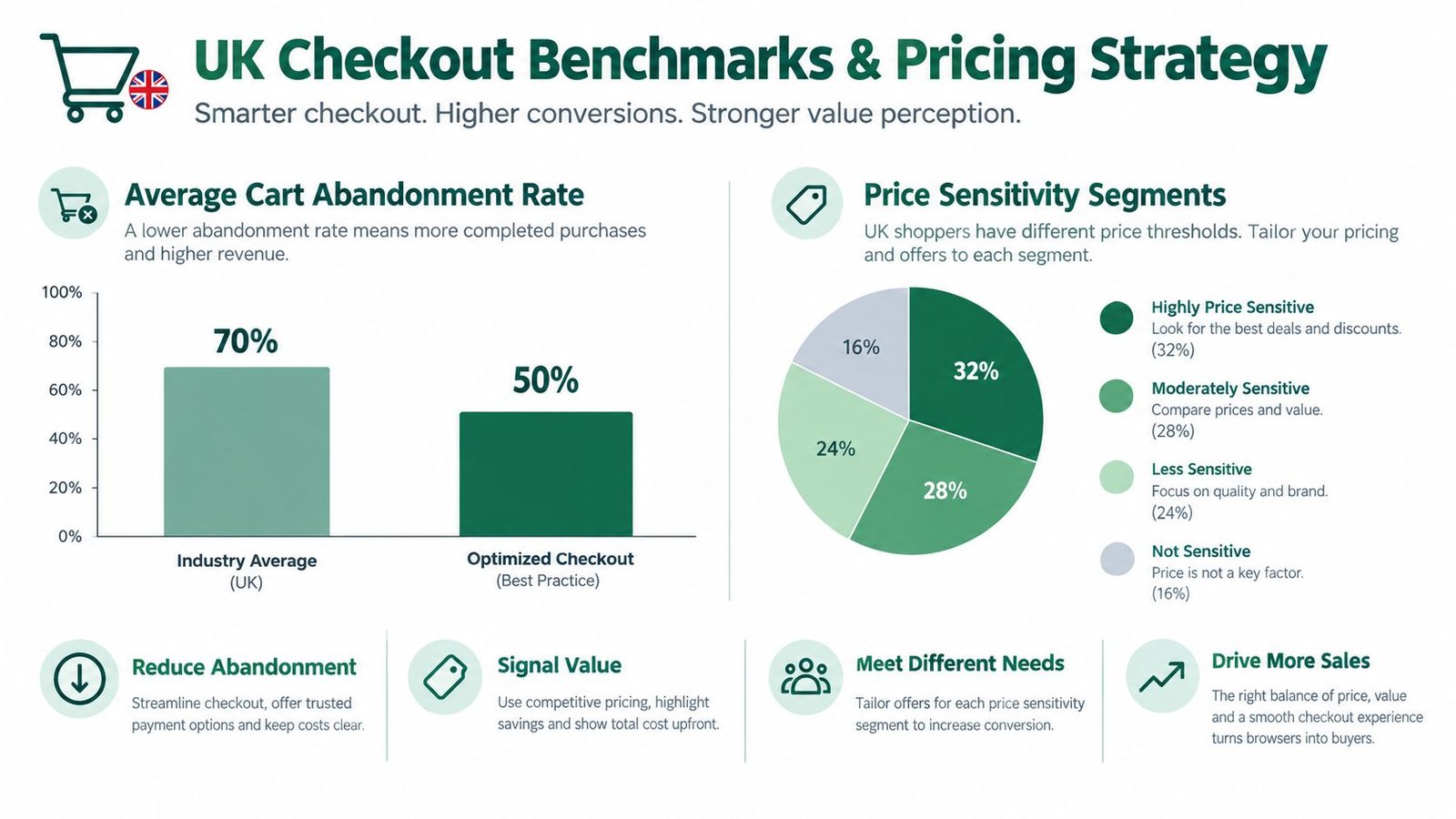
UK retailers surveyed by IMRG and Ecommpay reported an average checkout conversion rate of 58% in H1 2024, while single-page checkouts converted at 61%, compared with 56% for multi-page flows, according to this UK ecommerce checkout benchmark summary. The practical lesson is not that every business must copy one layout. It's that unnecessary steps deserve scrutiny.
A seller should test the journey from offer page to confirmation:
- Offer page: Is the total commitment clear before the buyer begins?
- Checkout: Are only necessary fields requested?
- Payment: Can the customer see the available payment route early?
- Confirmation: Does the buyer receive a clear record of the order?
- Fulfilment: Are the next actions visible without another request?
Mobile deserves separate attention. A Leeds Beckett and Retails Institute paper summarising Salesforce research reported that 74% of UK baskets in Q4 2024 didn't become completed orders, with mobile abandonment at 76% compared with 67% on desktop. The same source reported recovery rates below 5%, which makes prevention more valuable than relying on follow-up reminders. The UK ecommerce statistics analysis supports a practical priority: show the total price, delivery or access expectations and payment information before the buyer reaches the final step.
Treat fees as part of the offer
UK businesses generally can't add surcharges to consumer debit or credit card payments. The restriction applies to online, in-store and telephone payments from 13 January 2018, subject to limited circumstances described in Payment Systems Regulator guidance on card payment surcharges.
That means sellers should never disguise a card charge as a last-minute penalty. Where an optional Buyer Service Fee applies, it should be displayed clearly before the customer confirms payment, with the order total updated in a way that's easy to understand. The AmaJova fees information can be used to check platform-specific details rather than relying on assumptions.
The strongest pricing page isn't necessarily the cheapest. It explains the value, shows the complete amount at the right moment and gives the buyer a checkout path that feels proportionate to the purchase.
Managing Fulfilment and Order Records Efficiently
A sale isn't complete when the payment notification arrives. The seller still has to deliver the promised result, record what happened and leave the buyer confident that the order is progressing.
A unified order record should answer five questions at a glance:
| Order question | Physical product | Digital product | Service or live session |
|---|---|---|---|
| What was purchased? | Item, variant and quantity | File, licence or access type | Scope, appointment or session |
| What happens next? | Dispatch and delivery | Access or download instructions | Booking, preparation or delivery |
| What evidence exists? | Dispatch record and messages | Supplied file or access record | Notes, attendance or completion |
| What remains open? | Delivery issue or return | Access problem | Revision, rescheduling or support |
| When is it complete? | Receipt or resolved delivery | Confirmed access | Completion or agreed outcome |
Build a repeatable fulfilment sequence
For a physical product, the sequence may be confirmation, stock check, packaging, dispatch notification and delivery follow-up. The seller should record any tracking information and keep the item description aligned with what was sent.
For a digital product, the fulfilment step is access. The customer needs a working file or route to the promised content, plus instructions that don’t assume technical knowledge. If the buyer reports a problem, the seller should record the response and the replacement or access fix in the same order context.
Services require a more deliberate workflow. After payment, the seller can confirm the scope, request required information, schedule the work and mark milestones as they’re completed. Live sessions need booking confirmation, joining details and a clear record of any agreed change.
Centralised messages and status updates reduce the chance that a delivery instruction sits in one inbox while the payment record sits elsewhere. They also make support more precise because the seller can respond to the actual order rather than asking the customer to repeat the history.
A clean order record protects both sides. It shows what was bought, what was delivered and which questions remain unresolved.
The system should be simple enough to use consistently. A complex workflow that the seller avoids is less useful than a modest record updated after every meaningful action.
Providing Customer Support that Prevents Disputes
A customer buys a one-to-one strategy session described as “complete business guidance”. The seller intends to provide a focused call and a short summary. The customer expects a detailed plan, several follow-up messages and help implementing the recommendations. When the deliverable arrives, the customer feels short-changed even though the seller worked as intended.
That dispute started before checkout. The page allowed two reasonable interpretations.
A similar problem occurs with digital products. A buyer sees “templates and resources”, pays quickly and expects editable files, lifetime updates and personal feedback. The seller intended to provide a fixed download with no customisation. A short FAQ and a precise inclusions list could have prevented the mismatch.

Put the difficult answers on the page
The most valuable FAQs aren’t generic statements about satisfaction. They address the questions that could change the purchase decision:
- Scope: Does the service include implementation, revisions or follow-up?
- Access: What file format, software or joining method is required?
- Timing: When does work begin, and what can delay delivery?
- Changes: Can the buyer reschedule a live session or amend an order?
- Limitations: What can’t the seller provide under this price?
- Problems: How should the buyer report missing access, damage or an incorrect item?
A calm support response follows the same structure. Confirm the issue, refer to the agreed scope, state the practical remedy and give a clear next action. Sellers shouldn’t become defensive when a buyer misunderstood the offer. They should identify whether the page was unclear, then improve it for future customers.
Refund and cancellation handling also needs a written process. The AmaJova refunds and cancellations information can help sellers understand platform-specific routes, but the offer page should still explain relevant terms in plain language.
Support becomes faster when expectations are set before payment and the order record contains the relevant details. That protects the relationship without promising outcomes the seller can’t control.
Marketing Your OfferLink to Drive Conversions
Visibility works best when the marketing message and the offer page make the same promise. A social post that says “get a personalised review” shouldn’t lead to a page describing a generic information pack. A newsletter promoting a live workshop should match the booking details, preparation requirements and attendance terms shown at checkout.
The seller’s job is to create repeated, consistent entry points rather than rebuild the offer for every channel. An OfferLink can be placed in a social profile, email signature, newsletter, direct reply, partner recommendation or existing website. Each placement should explain why the audience should click, while the destination handles the full specification.
Build a small distribution system
A practical launch sequence can start with the channels that already contain relevant attention:
- Profile placement. Add the link to the biography or profile area where prospective buyers already look for the next step.
- Demonstration content. Publish a useful example, product detail, short lesson or behind-the-scenes explanation, then connect it to the specific offer.
- Personal follow-up. Send the page to people who have already asked a relevant question, without pressuring people who haven’t shown intent.
- Email context. Explain the problem, the outcome and who the offer suits before presenting the link.
- Partner referrals. Give collaborators one page to share, with wording that accurately describes the offer.
Trust signals should support the decision rather than overwhelm it. Verification information, protection resources, clear business details and a visible support route can help a buyer assess risk. They can’t compensate for poor fulfilment or an unclear promise, so the offer content remains the foundation.
Match the channel to the offer
A coach may convert interest through educational posts that show how a session works. An artist may need strong product photography and detail shots. A consultant can use a concise explanation of the problem solved, while an educator can demonstrate a lesson format or show what a live session requires.
The strongest promotion doesn’t try to reach everyone. It filters for the people who understand the offer and are likely to value it. That reduces low-quality enquiries, protects the seller’s time and makes the checkout page a continuation of the conversation rather than a surprise.
Navigating UK Compliance and Next Steps for Growth
UK sellers need a recordkeeping habit that matches their trading reality. A business selling through several channels should retain what was sold, when it was delivered, the amount paid, fees deducted, refunds issued and evidence of fulfilment. Mixed offers make this especially important because a service appointment, download and physical dispatch can create different records.
HMRC’s digital platform reporting rules require platforms to pass seller identity and earnings data to tax authorities, with reporting covering 2024 income from 31 January 2025 onward. Independent reporting based on HMRC FOI data says HMRC received records for 3,988,892 online sellers for 2025, representing almost £55 billion in reported earnings, as reported by Soldly’s summary of online selling tax reporting. Platform reporting doesn’t by itself determine every seller’s tax position, so sellers should keep organised records and obtain professional advice where their circumstances are unclear.
VAT is another concrete trigger. HMRC says a UK business must register when taxable turnover goes over £90,000 in a rolling 12-month period, or when taxable turnover is expected to exceed £90,000 in the next 30 days, as set out in the official VAT registration guidance.
Consumer rights also apply to online sales, downloads and streamed services. Before a digital download or stream starts, the customer must agree to immediate supply and acknowledge that the 14-day cancellation right will be lost. Those points must appear in the contract confirmation. If the required steps aren’t followed, the customer keeps the cancellation right without paying, according to the House of Commons Library briefing on consumer contracts.
A practical growth checklist is:
- Reconcile orders: Match payments, fees, refunds and fulfilment records.
- Review the offer: Update scope, timing and FAQs when questions repeat.
- Separate offer types: Keep physical, digital, service and live-session obligations clear.
- Check thresholds: Monitor taxable turnover and seek advice before a registration trigger.
- Strengthen trust: Complete relevant verification and present protection information accurately.
A seller can then explore progression options such as verification badges and priority growth placement where available, without treating growth status as a substitute for sound operations.
AmaJova gives sellers one OfferLink for presenting and selling physical products, digital products, services and live sessions, with checkout and order context connected to fulfilment and support. Visit AmaJova to turn a defined offer into a clearer selling journey and start organising the next order properly.