Selling handmade goods in the UK usually comes down to a few clear decisions. Get one well-defined offer for each product, put it where your buyers already spend their time, and take payment through a secure checkout. After that, it's about keeping every order on track with plain, consistent communication.
Table of Contents
- Why Buyers Are Already Shopping for Handmade Online
- Choosing a Selling Setup That Fits Your Workload
- Comparing Common Selling Setups for Makers
- Test the Setup Against Your Week
- Getting the Basics Right
- Being Upfront About Lead Times and Variation
- Setting Boundaries Before Production Starts
- Answering Questions Before Anyone Asks
- Valuing Your Time Honestly
- Checking Your Price Against the Market
- Being Clear About Postage
- Reviewing Prices Regularly
- Make Checkout Feel Simple
- Be Honest About Delivery Timings
- Keep Every Order in One Place
- Message Templates for Every Order Stage
- Start with GOV.UK
- Information and Cancellation Rights
- Tax and Registering with HMRC
- Products with Extra Requirements
- Your Pre-Launch Checklist
- Mistakes That Slow New Sellers Down
Why Buyers Are Already Shopping for Handmade Online
Waiting for a perfect shop is a quick way to miss the moment. Crafts Council research on UK craft buyers shows that online purchasing has grown considerably over the past two decades. Read the full research on UK craft buyers
Those buyers are already looking. The real question is whether they can find you and feel sure enough to pay.
The Five Stages of Selling Crafts Online
Think of these five stages as a practical route from your first idea to a finished order. Each one asks something slightly different of you, and each one has a question the buyer is quietly asking.
| Stage | What the Seller Does | What the Buyer Needs to See |
|---|---|---|
| Create | Defines one clear offer | Exactly what they receive |
| Share | Posts one simple link | A trustworthy first impression |
| Sell | Sets the price and checkout | Total cost before paying |
| Fulfil | Makes and dispatches orders | Realistic timings and updates |
| Get paid | Confirms completion of the order | A clear record of payment |
Notice how much of the buyer's side is about reassurance. Most people who abandon a purchase aren't put off by the craft itself. They're unsure what they'll get, what it will cost in the end, or when it will turn up.
Choosing Where to Start
- New to selling? Start with your offer and pricing. Getting those right makes everything else easier.
- Already selling informally? Take a hard look at checkout and delivery. Friends and regulars will forgive a lot, but strangers won't.
A clear, costed offer will almost always outsell a beautiful shop with vague details.
Each stage gets its own section below, so you can jump straight to whichever one you feel least sure about. Most sellers find the gaps sit in one or two places, not all five.
Start with the hours you can actually spare, not the shop you hope to run one day.
Choosing a Selling Setup That Fits Your Workload
Most makers end up choosing between three routes: a standalone website, a craft marketplace, or a simple shareable offer page. Each can work well. The real question is how much setup effort, total charges, branding freedom and ongoing upkeep you can live with before you commit.
Government figures give a sense of the wider picture. The UK Government's Longitudinal Small Business Survey 2025 found that 70% of SME employers used technology or web-based software to run their business, and 29% used that software to sell online. Those numbers show how common these tools have become, but they say nothing about which setup suits your situation. Explore the government's small business technology findings
Comparing Common Selling Setups for Makers
Here's a quick side-by-side look at the three options and where each one tends to fit.
| Setup | Best For | Main Trade-off |
|---|---|---|
| Standalone website | Makers who want full control over their branding | Budget for design, hosting and ongoing maintenance |
| Craft marketplace | Sellers who want built-in discovery | Listing fees, commission and limits on how your shop looks |
| Shareable offer link | Focused offers promoted directly to your followers | Little control over layout, and you'll need to drive your own traffic |
Treat these as starting points rather than fixed promises. Fees and terms change, so check each provider's current subscriptions, transaction charges and paid extras before you work out your costs. A setup that looks cheap on paper can get pricey once the add-ons creep in.
Test the Setup Against Your Week
Picture a part-time jeweller making personalised pendants between shifts at a day job. Keeping a large catalogue up to date would eat into the evenings she needs for packing orders. A single pendant offer linked from her Instagram bio, though, might fit around her life far better.
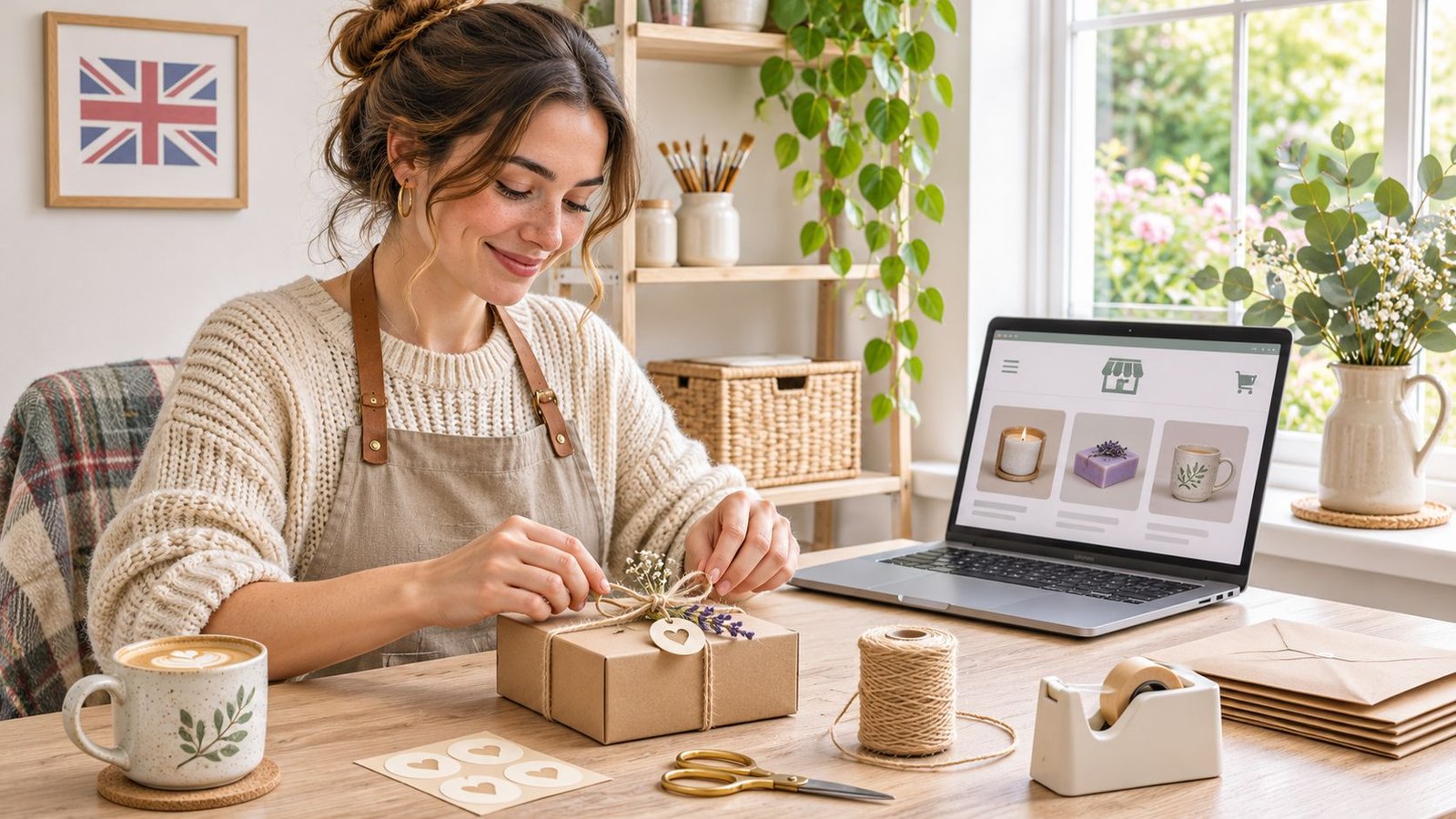
Some sellers use a dedicated tool to share a single offer without building a full website. AmaJova is one example. Check what's currently available on any tool before you rely on it, and make sure it covers the products, services or live sessions you plan to sell.
To see which setup actually fits, try this:
- List the tasks your setup has to handle, from taking payment to answering customer questions.
- Build one complete offer before you commit to anything.
- Estimate how many hours a week the admin will take, alongside the making.
Choose the smallest setup that handles your actual orders clearly.
Compare your favourite options this week, then draft one offer. If you can keep it running during a busy stretch at work, you've found a setup you can live with.
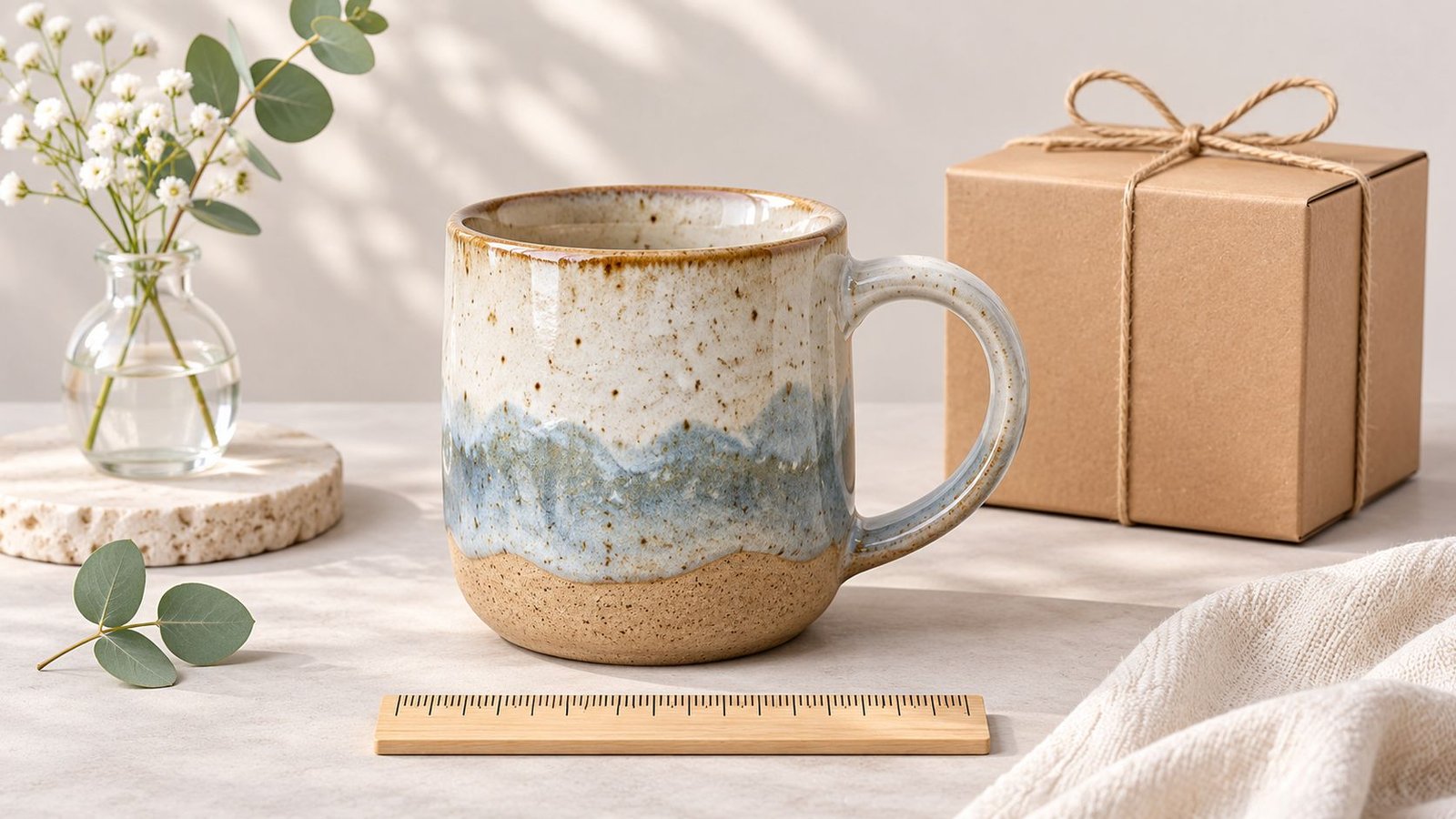
Most buyers decide whether to purchase from the listing alone, so the offer has to do the heavy lifting.
Getting the Basics Right
Your title should say exactly what the item is. Handmade Stoneware Mug, 300ml does more work than a clever name ever could. Someone searching for a mug will spot it straight away and know whether it suits them.
If you sell on Etsy, these Etsy keyword research software reviews are worth a look when you're choosing the words people actually search for.
Then fill in the details buyers usually go hunting for:
- Materials and dimensions, such as height, capacity or print size
- What the price covers, including packaging and whether postage is extra
- How it's made and when it leaves your workshop, in a sentence or two
A photo with a teaspoon beside the item shows the scale at a glance. It also saves you from answering "how big is it, really?" in your inbox.
Being Upfront About Lead Times and Variation
If you take commissions, say how long they take, plainly and near the top of the listing. Also warn that glaze colours can shift slightly between firings. Buyers who know this in advance rarely complain when a mug arrives a shade different from the photo.
Printmakers face a different question. If you sell digital downloads, list the file formats, such as PDF or PNG, and explain how the buyer gets access. Is it an instant download, an emailed link, or a login to an account? Spell it out.
Being honest about variation turns a possible complaint into a pleasant surprise.
Setting Boundaries Before Production Starts
Decide how many personalised changes are included, such as one round of name or colour edits. Then say what happens if someone asks for a change after you've started. A line like "Edits are possible until the piece goes on the kiln" sets the rule without any awkward back-and-forth later.
Answering Questions Before Anyone Asks
Most buyers ask the same handful of things, so a short FAQ on the listing saves you typing the same reply over and over.
Optional extras, such as gift wrapping, should show their price on the product page rather than appearing for the first time at checkout. Nobody enjoys finding a surprise charge at the final step.
If your range includes cards too, you might find this guide on how to sell greeting cards online useful.
Before you publish, read the listing as a buyer would, from the photos right through to the delivery details. Fix anything that confuses you while it's still easy to change.
Most makers undercharge for one simple reason: they only count the wax or the fabric. The real cost of an item runs well beyond that, and your price has to cover all of it.
Start by splitting your costs into four parts:
- Materials: the wax, wick, fabric or clay you use for each item
- Making time: the hours you spend producing it, valued at a rate you can live on
- Packaging and postage: boxes, tissue, tape and the delivery cost
- Overheads: tools, software, platform fees and anything else that keeps the business running
Add those figures together for a single item, then add a margin you can comfortably justify to yourself.

Valuing Your Time Honestly
Picture a candle maker who spends two hours making a batch of six. Those hours have a real value, even if no invoice ever goes out for them.
Divide your time across the batch, and each candle carries its fair share of labour. It's a small mental shift, but it changes the numbers more than you'd expect.
If a price only works when you ignore your own labour, it isn't sustainable.
Checking Your Price Against the Market
Compare your total with similar items on the marketplaces and sites your buyers already use. Look closely at what's included, not just the sticker price.
A mug with postage included isn't directly comparable to one where delivery is extra. Put them side by side and the gap often disappears.
Being Clear About Postage
Nothing unsettles a buyer quite like a delivery charge that appears at the last moment. Say whether postage is included or charged separately before they reach the payment stage.
Buyers will accept a higher price far more readily than a surprise charge.
Reviewing Prices Regularly
Material costs and running expenses shift over time. Review your prices every few months, and update your totals whenever a supplier raises their rates.
Read also: how to sell art prints online.
Nothing here guarantees earnings, but a clear, costed price is far easier to defend than a guess.
Once a buyer has picked your piece, the next few minutes often decide whether they come back. Checkout, dispatch and messages are where trust is built or lost.
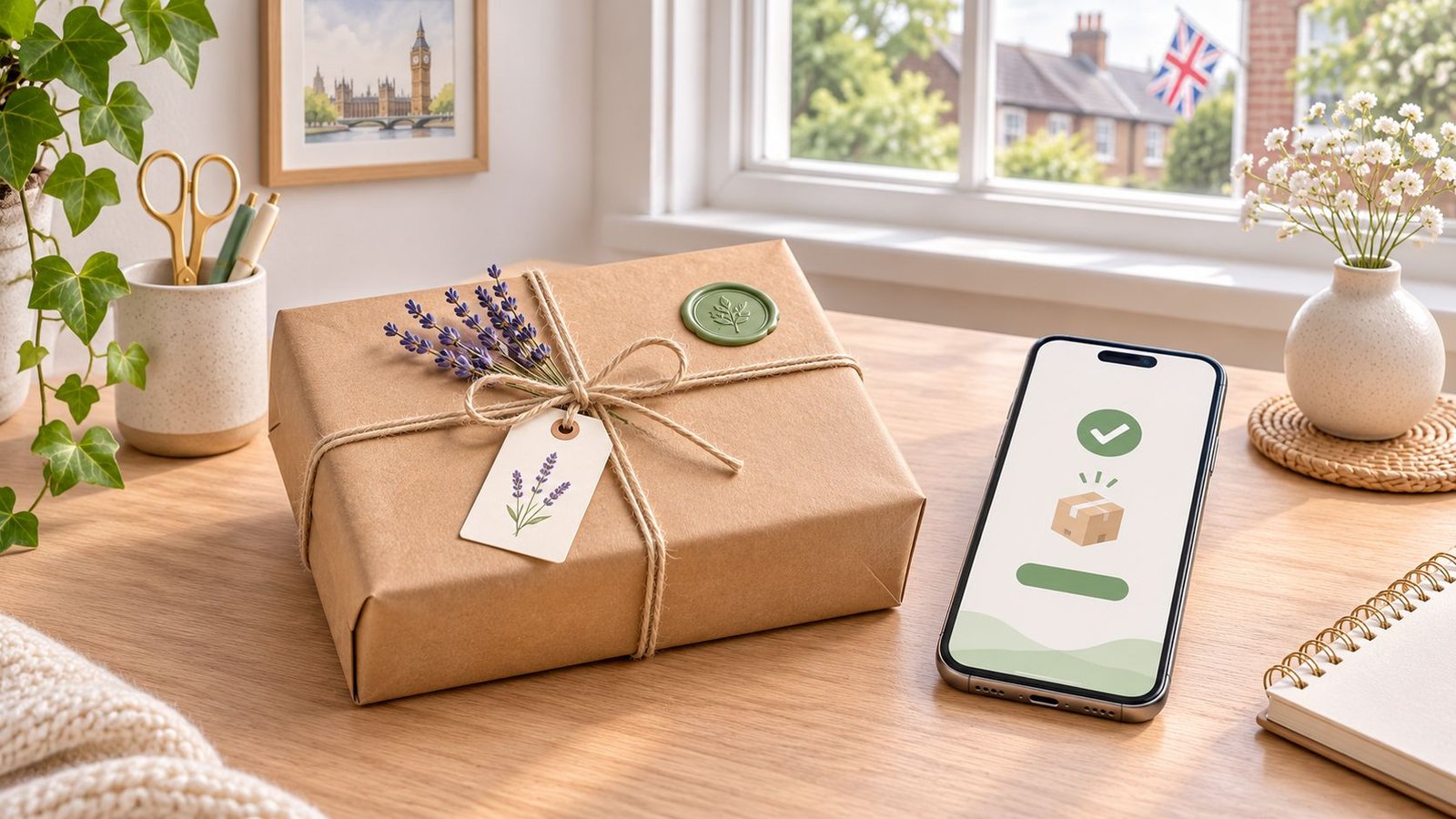
Most UK shoppers are comfortable buying online by now. ONS retail sales data tracks how much of total spending takes place online, and the trend has been upward for some time. Explore the ONS retail sales data
Make Checkout Feel Simple
Put your delivery options on the product page rather than springing them on people at the final stage. A buyer who already knows the postage cost and rough timescale is far less likely to abandon their basket over a surprise charge.
Say plainly whether tracking is included. If it isn't, say that too. Buyers forgive a lot when they know what they're getting.
If you're working through the checkout side of your setup, this checkout optimization tips for online stores is worth a read alongside this guide.
Be Honest About Delivery Timings
Processing time matters just as much as postage. "Soon" means something different to everyone, so write 3 to 5 working days instead. Buyers then know roughly when to look out for a parcel.
It also helps to explain what happens when something goes wrong. If a parcel goes missing or arrives damaged, who covers the replacement, and what photos will you need? Setting that out early saves a lot of back-and-forth later.
A clear delivery promise written up front prevents more emails than any apology written afterwards.
Keep Every Order in One Place
Most order confusion comes from messages scattered across different places. Payment details sit in one inbox, delivery updates arrive by text, and questions turn up on Instagram. Something always gets lost.
Keeping everything in one order record makes life much easier, whichever tools you use. A simple spreadsheet or order book can do the job if you don't yet have a dedicated system.
Read also: how to create a payment link for the payment side of the process.
Message Templates for Every Order Stage
These three messages cover most of what you'll need to send. Adjust the wording so it sounds like you rather than a form letter.
Order confirmation
Hi [Name], thanks for your order of [item]. I'm making it now and it should leave on [date]. I'll message you when it's posted.
Dispatch update
Good news, your order is on its way. Here's your tracking number: [number]. Let me know if anything looks wrong when it arrives.
Delay note
Hi [Name], a quick note to let you know your order will be a few days later than planned, as I'm waiting on materials. I'm sorry for the wait and I'll send an update by [date].
Selling online comes with admin that has nothing to do with your craft. Much of it depends on where you're based and what you sell, so treat this as a starting point rather than advice for your own situation.
Start with GOV.UK
If you only bookmark one thing, make it GOV.UK's guidance on running an online business and on consumer contracts. It's free, it's kept up to date, and it's written in plain English for people who aren't lawyers. That's more than you can say for most of what turns up in a search.
Information and Cancellation Rights
The Consumer Contracts (Information, Cancellation and Additional Charges) Regulations 2013 set out what you need to tell buyers and when they can cancel. They apply to many online sales to consumers, so check whether and how they affect your business. The full text is on legislation.gov.uk. It's worth skimming, even if you only read the sections that affect your returns policy.
Tax and Registering with HMRC
Money from selling goods can be taxable, and depending on how you trade, you may need to register with HMRC. Check their current guidance for your circumstances, including any thresholds and reporting rules. Try not to rely on a figure you remember or one you spotted in a forum thread, because those go out of date quickly.
Rules and thresholds change, so the official source always beats a figure you saw last year.
Products with Extra Requirements
Some products come with their own rules on top of the general ones. Food, cosmetics and items made with certain materials can need extra checks before you list them. Sort this out at the start. It's far easier than pulling listings down after orders have already gone out.
Once sales start to grow, it's worth speaking to a qualified accountant or adviser who can look at your own circumstances. They can explain how your obligations shift as your income does.
Before your first listing goes live, run through this quick check. Most of it takes minutes, and it catches the problems buyers notice first.
Your Pre-Launch Checklist
- Confirm the offer title, materials, dimensions and what the price includes.
- Compare each price against your costed total, including postage.
- Place a test order and check the checkout from a buyer's view.
- Save your order update templates somewhere you can reach quickly.
- Check your legal and tax obligations on GOV.UK and HMRC.
Shoppers rarely grumble about a well-made piece with clear details. What they do grumble about is being caught off guard.
Mistakes That Slow New Sellers Down
- Vague processing times. Give a working-day range and be clear about when the clock starts.
- Prices that quietly exclude postage. Show delivery costs beside the price, not as a surprise at checkout.
- Photos with no sense of scale. Add one shot with a familiar object, like a hand or a pound coin, so people can judge the size.
- Relying on one platform. Keep your own spreadsheet of customers and orders. If an account gets suspended, you still have a way to reach them.
Most of these fixes take less than an hour, so sort them out before you launch.
Nobody gets a flawless shop on day one, and you shouldn't aim for one. Launch with a single product, take a handful of real orders, and tweak things as you learn what your buyers actually care about.
If you're thinking about a handmade candle brand in particular, this guide on starting a candle making business walks through the launch process in more detail.
When you're ready to put your first offer together, you can explore what's available at amajova.com.